What to expect from an Axe & Wedge Tree Works project will depend on a number of factors: the type, size, scope, and complexity of the work. The access to your trees, the type of yard, the equipment and manpower needed, as well as unknown factors like the internal integrity of the tree and the weather, all have to be considered when completing a tree project.
How Trees Are Removed: The 3 Main Approaches
While seemingly complex, most tree projects fall into three main access categories:Felling
If your project is a removal and the tree has enough space, it may be possible to cut the tree down in one piece using a method called felling. The trunk is face-cut to weaken the tree and help determine the direction of fall. A back cut removes the holding wood until the tree's centre of mass causes it to fall. Wedges or pull ropes may be used to guide the tree in a controlled direction. Once on the ground, the trunk is processed into smaller, movable pieces.Climbing
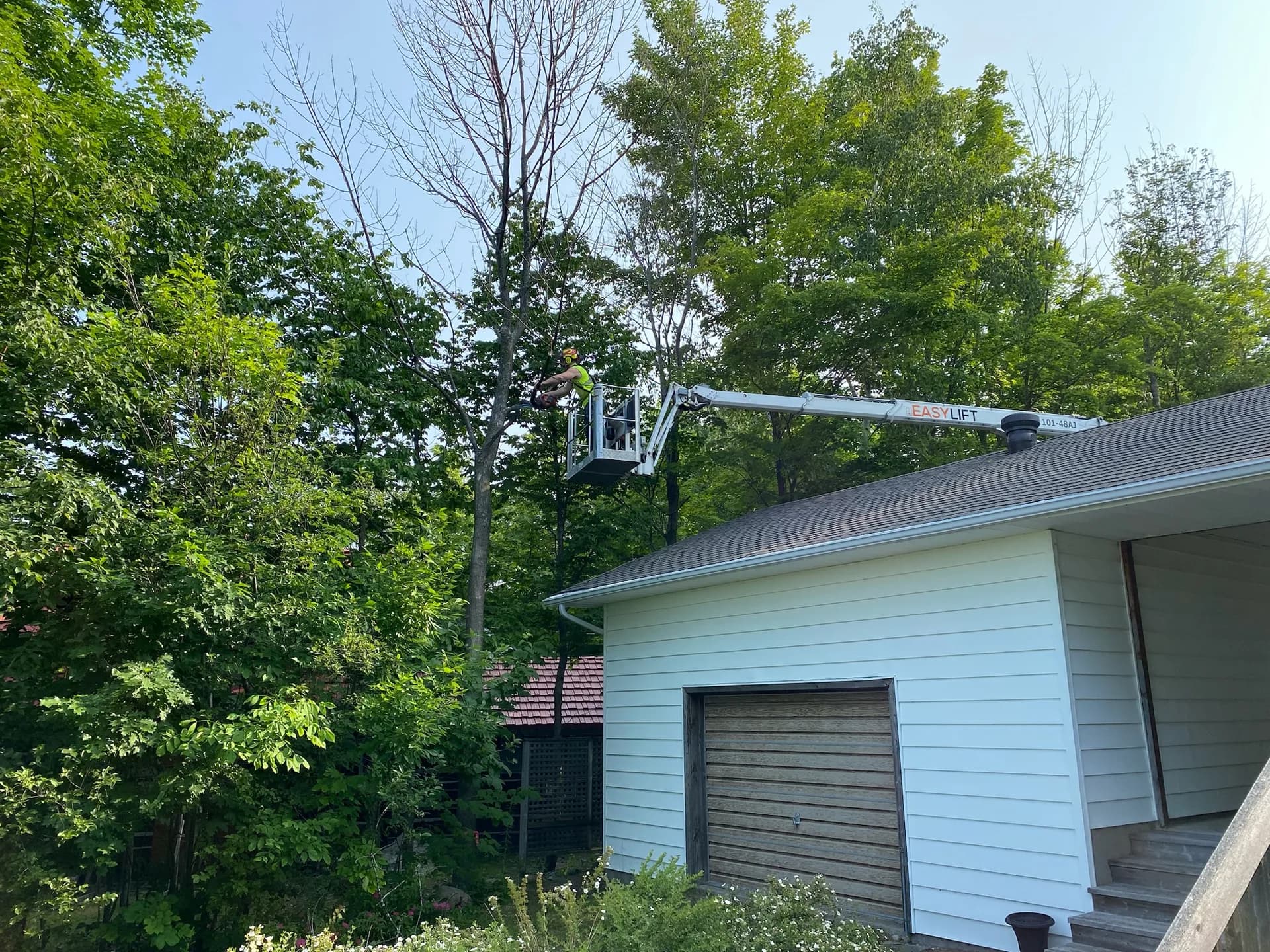
If the tree is close to buildings or power lines, felling isn't practical or safe. In these cases, a mechanical spider lift is used, or the tree is scaled by one of our professional tree climbers. Branches are cut off and dropped into a controlled drop zone, or rigged down with ropes, to prevent them from falling into hazards like power lines or onto adjacent structures.Crane Removal
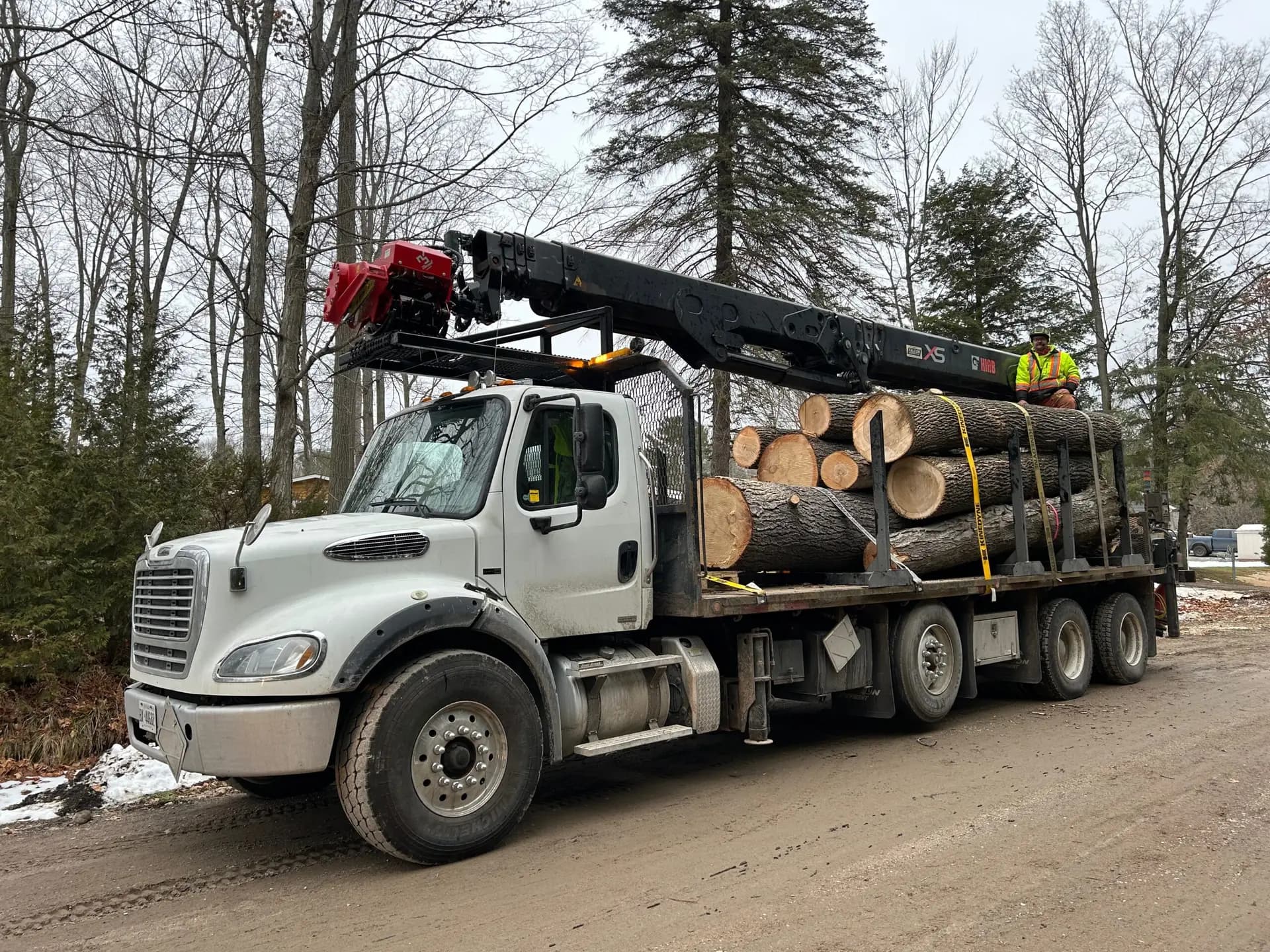
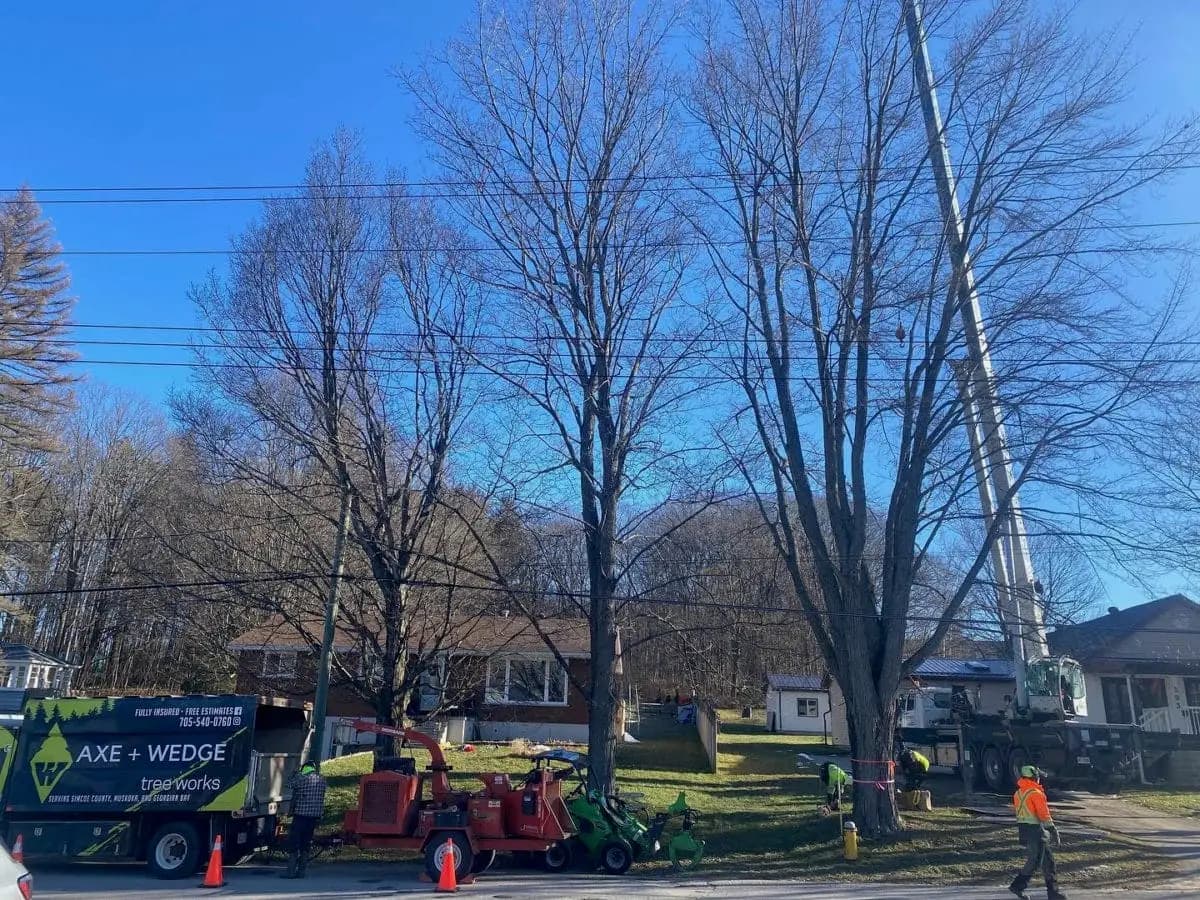
If access for machinery is limited or the terrain is too rough, we may use a large crane to lift trees out of the yard where they stand and place them down in a more accessible area — usually the road. This is often the preferred method to minimize yard damage and ensure ultimate control when lowering heavy material safely.The Day of Your Tree Project
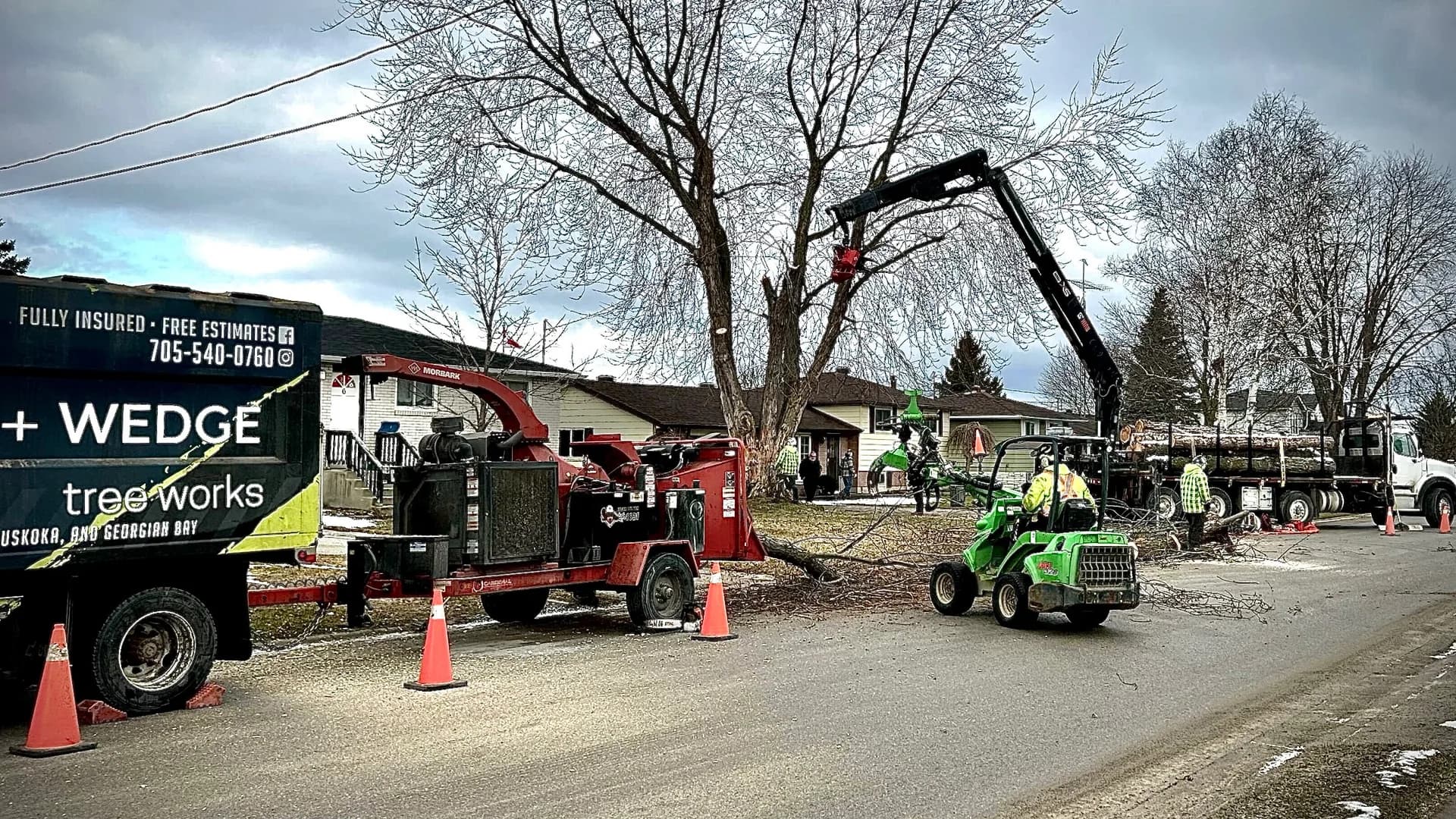
On the day of your project, crews will arrive with multiple trucks, trailers, and equipment. The crew supervisor will conduct a quick site audit and discuss any final scope-of-work details with you. Meanwhile, the crew will set up the site: establishing a safe work zone, controlling traffic, laying protective ground mats, and unloading all the machinery needed for the job.Before the actual tree work begins, you will see the crew gather for a brief tailboard safety meeting. They will discuss the scope of work, work plan, known hazards, and safety plan. Roles and responsibilities are then assigned and the crew gets to work.
What Will Be Left After the Job?
For a typical tree removal, the tree is cut down to a low stump, as flush to grade as reasonably possible. Branches 9" in diameter or smaller will be chipped and removed unless you request that the chips be left on site. The trunk wood will either be left for your use as logs, stacked as 4-foot sections or 16-inch firewood rounds (as an extra service), or hauled entirely from site.If you want to eliminate the stump, you can opt to have it ground down 6–8 inches below grade with our stump grinder, or removed entirely with an excavator. These are extra options that need to be discussed with your sales rep prior to the project or as a new work order once the tree is down.
The crew will clean their way out of your yard. All leaves and branches will be raked up to the best of our ability, and any major divots from moving heavy wood will be filled with topsoil. While weather can make it hard to get things spotless, we do our best to ensure a five-star cleanup.