Ask five homeowners when they last had their trees pruned and at least three will tell you 'whenever the tree guys were in the neighbourhood.' Timing matters more than most people realize — prune at the wrong time of year and you can stress the tree, invite disease, or completely miss the window that would have given you the best result.
As arborists who work in Ontario's climate year-round, we've learned which pruning windows work and which ones cause unnecessary problems. Here's a practical guide for the most common species you'll find in Simcoe County.
The General Rule: Late Winter Is Best for Most Deciduous Trees. For the majority of deciduous trees — maples, ashes, lindens, honey locusts, birches — the best time to prune is February through early April, just before bud break. Here's why: the tree is fully dormant, so there's minimal flow of sap to create excessive weeping. Fungi and insects that infect wounds are largely inactive in the cold. You have clear visibility of the branch structure without leaves. The tree will respond to pruning wounds with vigorous new growth and rapid wound closure when spring arrives.
The Exceptions: Species With Disease Concerns. Oaks should never be pruned from April through October in Ontario. Oak Wilt — a fungal disease transmitted by beetle vectors — is active during warm months, and fresh pruning wounds are highly susceptible to infection. Prune oaks in January or February. Elms are similarly vulnerable to Dutch Elm Disease, which is spread by bark beetles during spring and summer. Limit elm pruning to the dormant season. Fruit trees (apple, pear, cherry) are best pruned in late winter before bloom to maximize fruit production and minimize disease pressure.
Evergreens: A Different Set of Rules. Spruce, fir, and pine are generally pruned in late spring, just after new growth (candles) have emerged but before they have fully hardened. This allows you to shape growth while minimizing stress. Cedar and arborvitae can be lightly trimmed in early summer and again in late summer, avoiding pruning in fall (which can stimulate new growth that won't harden before frost).
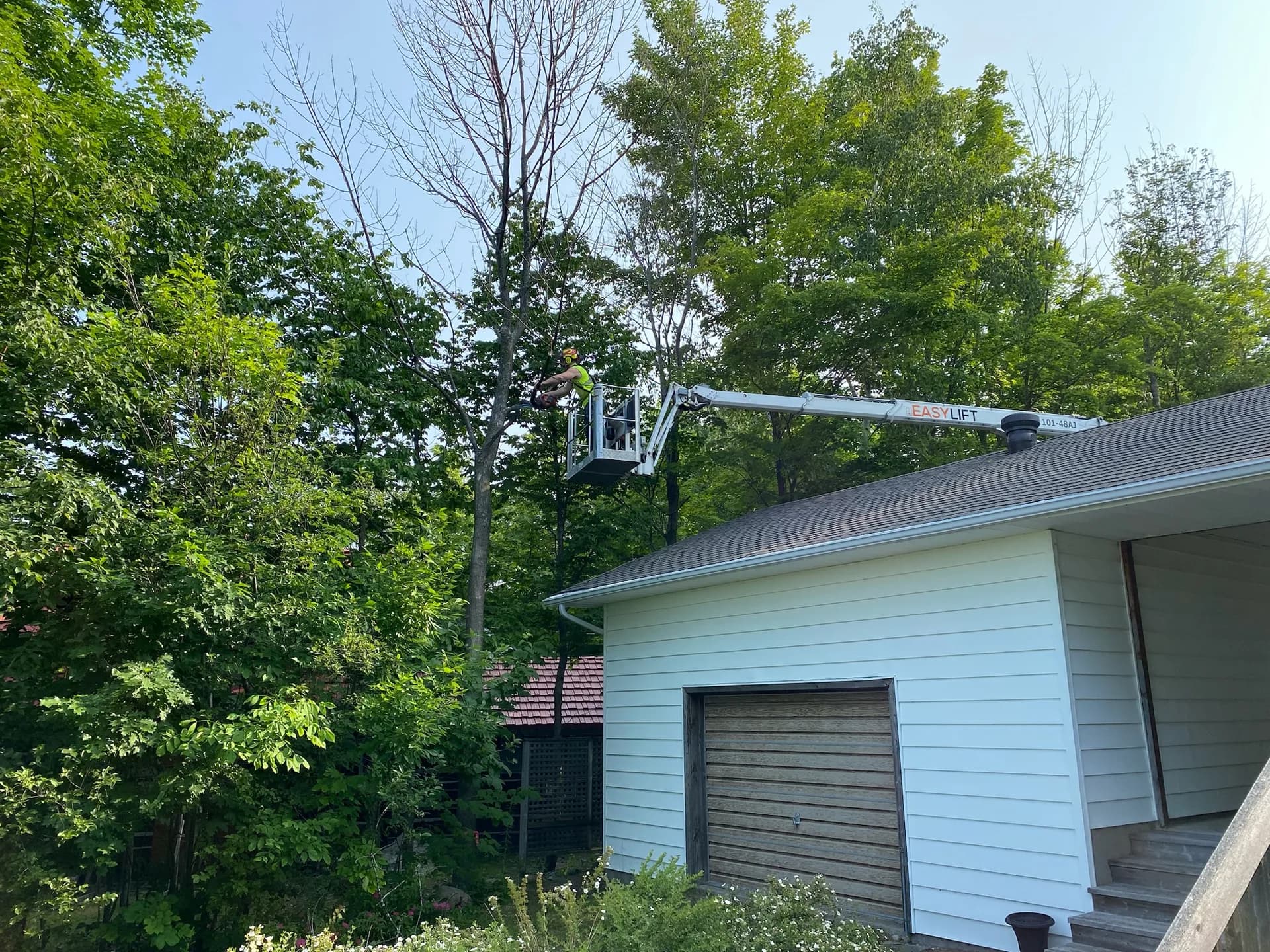
Emergency and Hazard Pruning: Any Time of Year. This point cannot be overstated: if you have a dead, cracked, or dangerous branch hanging over your house, your car, or a place where people walk, do not wait for the 'right season.' Remove it now. The risk posed by a dangerous branch far outweighs any minor stress from off-season pruning. We perform hazard pruning year-round for this exact reason.
What About Summer Pruning? Light pruning in summer — removing small dead branches, crossing twigs, and minor clean-up — is generally fine for most species. What you want to avoid in summer is heavy removal of live canopy, which forces a tree to draw on energy reserves to replace lost foliage while also managing the stress of heat and active growth. Heavy structural pruning is best left for dormant periods.
The Bottom Line. If you're planning routine maintenance pruning in Simcoe County, aim to schedule it between January and late March for most trees. This gives you the best outcome for tree health, wound closure, and disease prevention. For any tree showing signs of distress or hazard, call us for an assessment regardless of the season — that's exactly what we're here for.