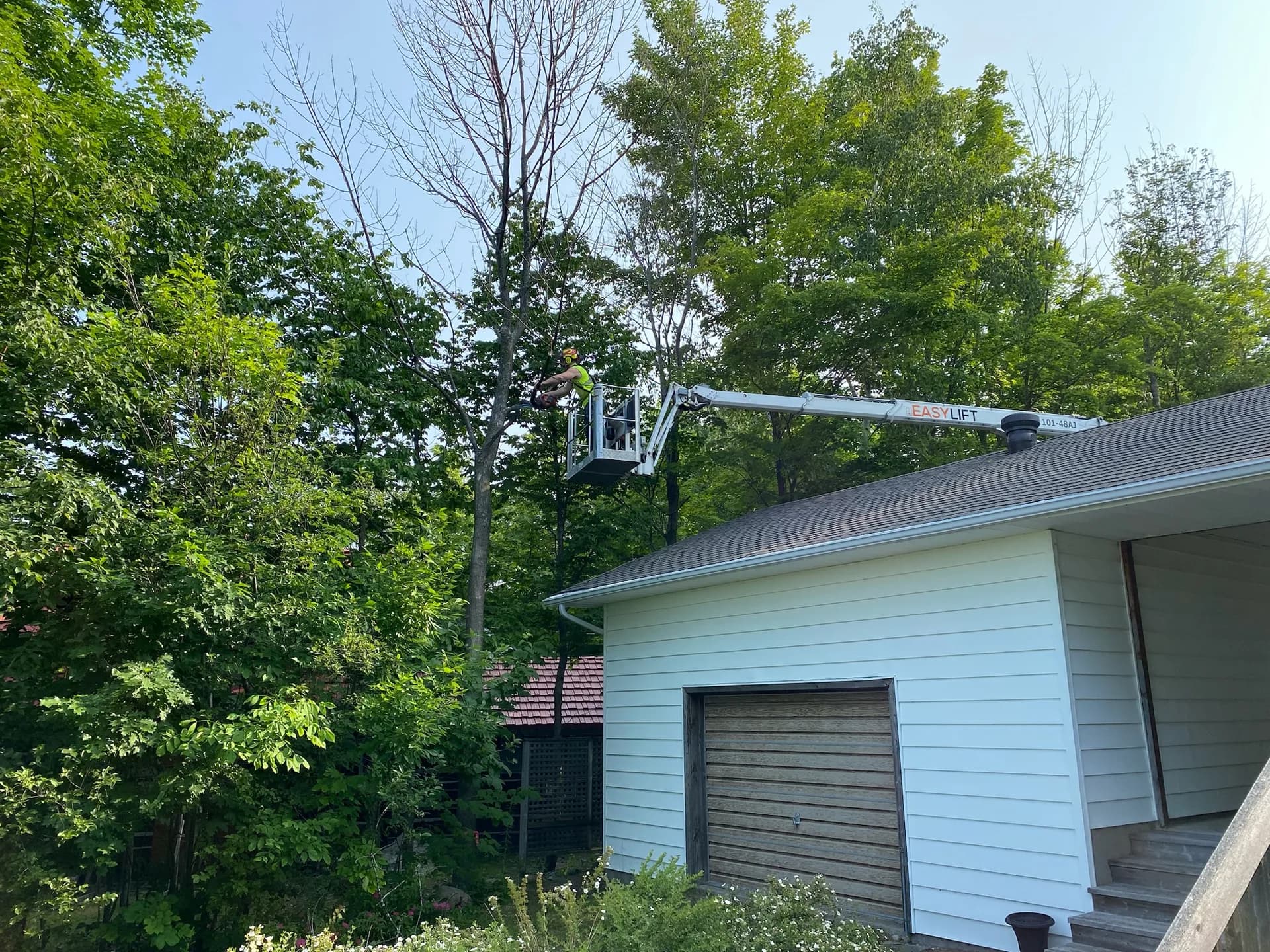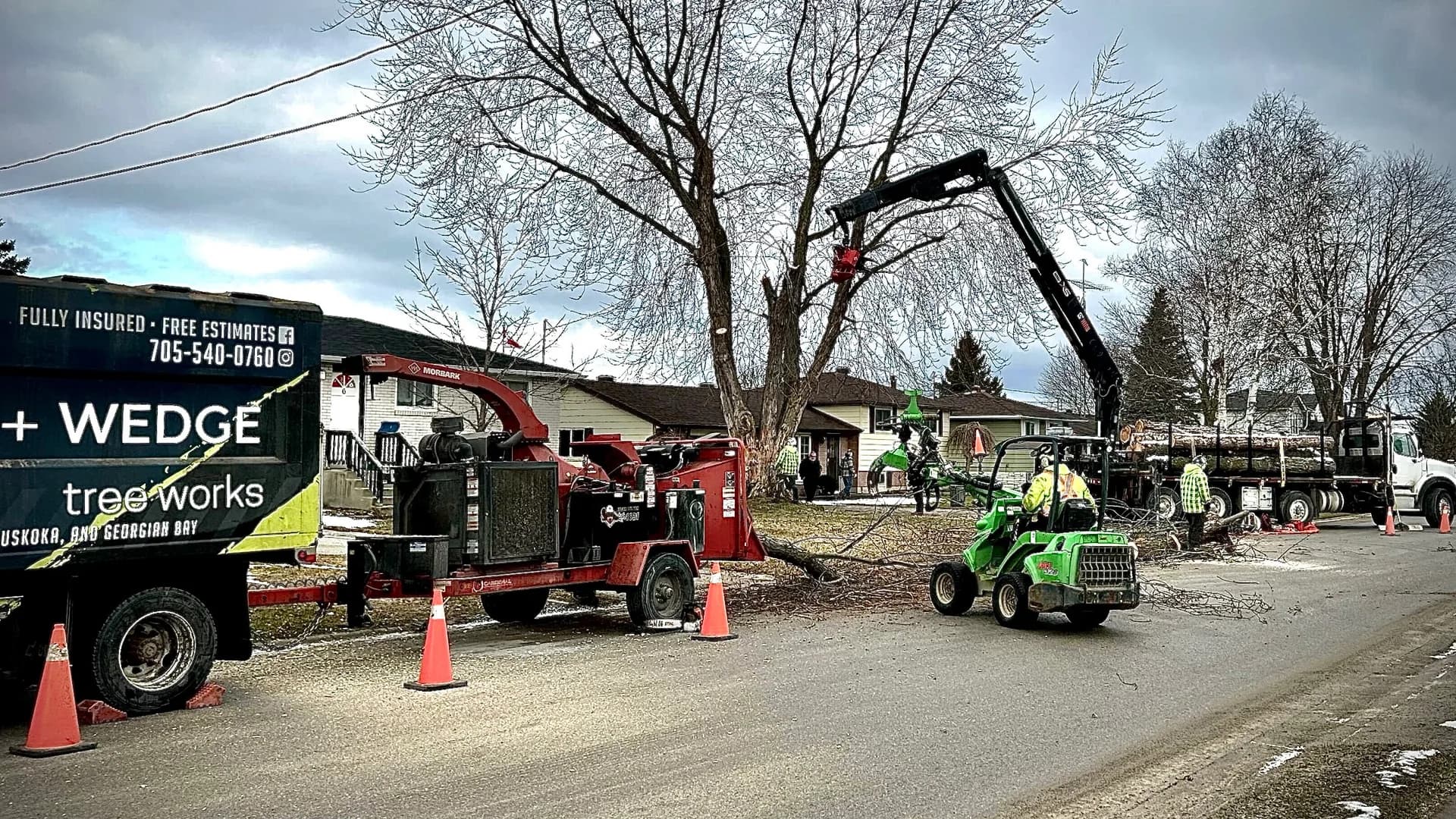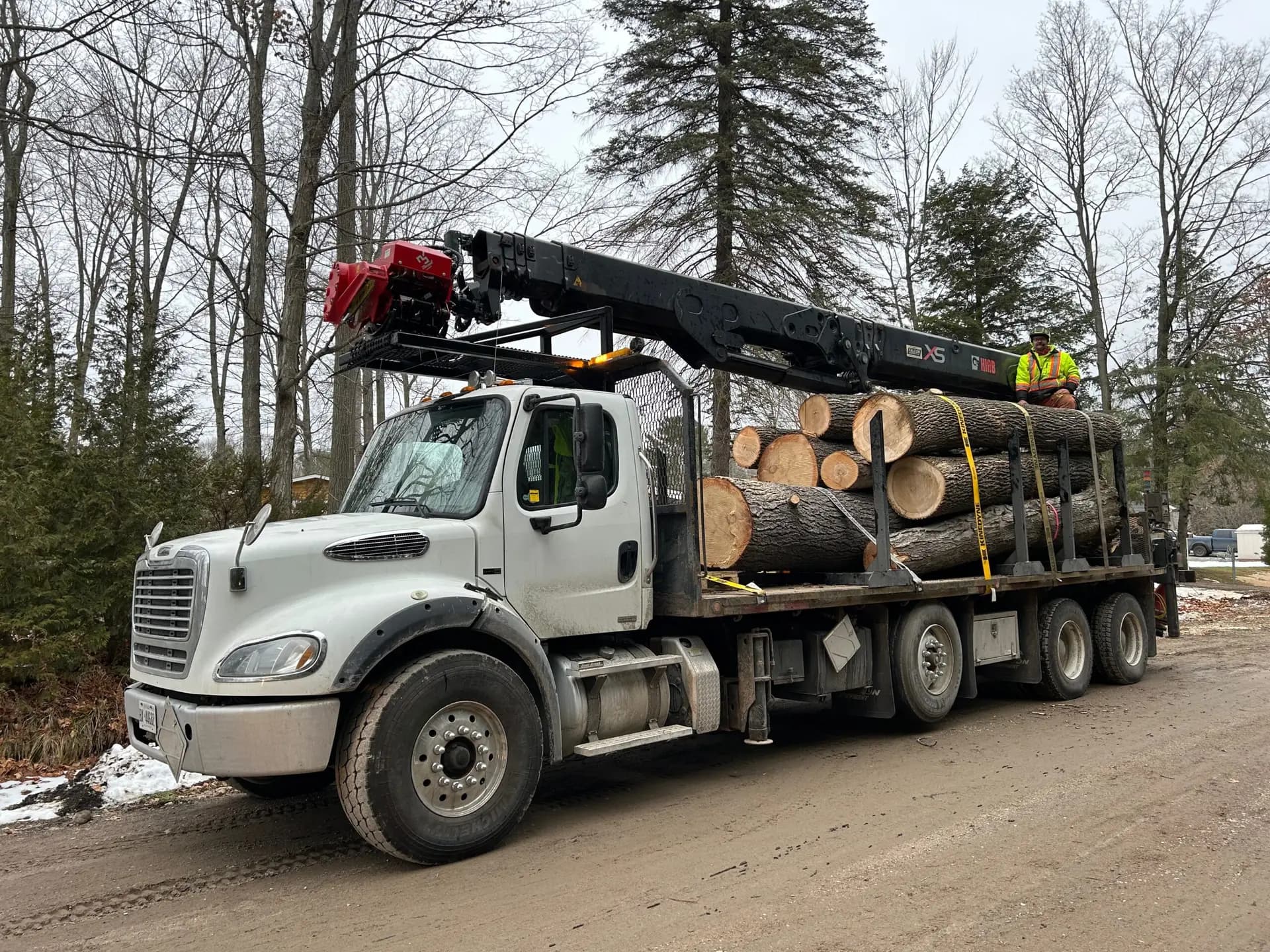
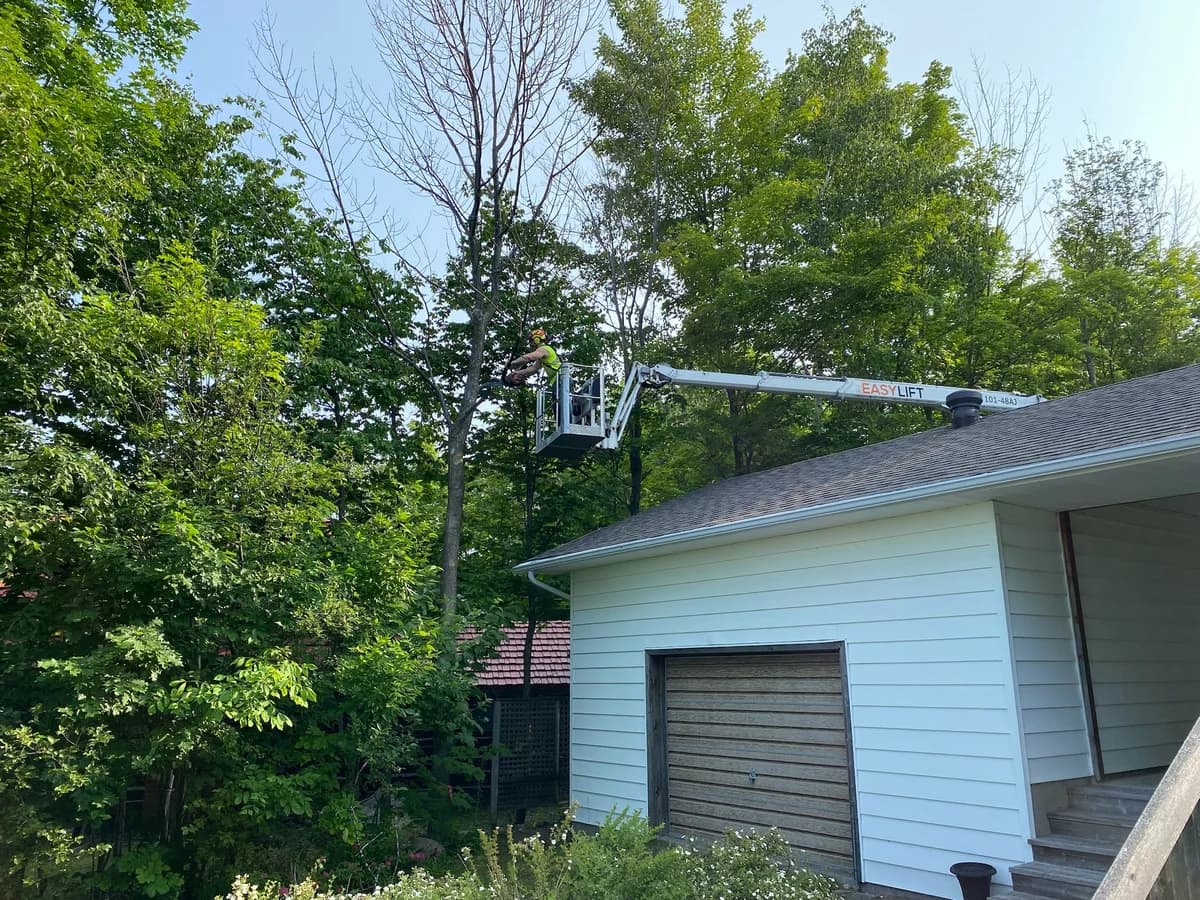
One of the most common questions homeowners in Simcoe County ask us is some version of: do I really need to take it down, or can you just trim it? It is a fair question — and the honest answer is that it depends on the specific condition of the tree, its location, and what you are trying to achieve. Trees are long-term assets, and unnecessary removal is costly in more ways than one. But so is deferring a removal that should happen now.
When Trimming (Pruning) Is the Right Answer
Pruning can address a surprising range of problems that, at first glance, might look like removal territory. A qualified arborist will recommend pruning when the structural issues are confined to specific branches rather than the whole tree; the trunk and root system are sound; the tree retains at least 50% of its live canopy after the proposed pruning; the tree is not posing an immediate, imminent hazard; and targeted removal of dead, diseased, or structurally weak branches will substantially reduce the risk and restore the tree's appearance and health.
A tree that looks half dead from the street is not necessarily a removal candidate. In many cases, the tree has lost a portion of its canopy to disease, storm damage, or drought stress — but the trunk is structurally intact and the remaining canopy is healthy. Removing the dead wood, improving the soil conditions, and correcting any underlying watering or drainage issues can sometimes reverse what looks like terminal decline.
When Removal Is the Right Answer
There are situations where no amount of pruning will resolve the underlying problem. Removal is typically the appropriate recommendation when more than 50% of the crown is dead or irreversibly damaged; there is significant decay in the trunk (particularly if the hollow or decayed area exceeds one-third of the trunk's cross-section); the root plate has lifted or the tree has developed a sudden lean indicating root failure; the tree is infected with a lethal, untreatable disease such as advanced Emerald Ash Borer infestation, late-stage Dutch Elm Disease, or lethal yellowing; the tree is located where a failure would cause serious damage or injury and the risk cannot be mitigated by pruning; or the tree has been severely damaged by storm, construction, or trenching near the root zone.
Cost Comparison: Pruning vs. Removal
| Tree Pruning | Tree Removal | |
|---|---|---|
| Typical cost in Simcoe County | $300–$1,200+ depending on size and scope | $500–$5,000+ depending on size and complexity |
| Time to complete | 1–4 hours for most residential trees | Half day to full day for large removals |
| Equipment | Hand tools, pole pruners, climber, bucket truck | Climber, crane, chipper, grapple truck |
| Outcome | Tree retained; health and structure improved | Tree eliminated; stump grinding optional add-on |
| Long-term value | Protects and extends the life of an existing asset | Eliminates risk; site can be replanted |
When a Tree That Looks Dead Might Not Be
Trees can appear to be in serious decline — sparse foliage, dieback in sections of the crown, discoloured leaves — while still being fundamentally healthy enough to recover. This is especially true after a difficult growing season. Ontario experienced severe drought conditions in 2023 that stressed many trees in Simcoe County, causing what appeared to be significant dieback that turned out to be temporary. Before removing any tree based on appearance alone, have a qualified arborist perform the scratch test: lightly scoring the bark on several branches throughout the crown. Living wood will reveal bright green beneath the bark; dead wood will be brown and dry throughout.
A Decision Framework for Homeowners
- Is the trunk sound? If yes, the tree is a pruning candidate. If the trunk has significant hollow or severe basal decay, lean toward removal.
- How much live canopy remains or would remain after pruning? If at least 50% can be retained, pruning is viable. Below 50%, recovery is unlikely.
- Is there a risk to people or structures if the tree fails? High-consequence failure zones justify a lower risk tolerance and a quicker removal decision.
- Has the tree responded to similar pruning in the past? A tree with a history of decline after treatment is a lower-probability recovery candidate.
- What is the replacement value? A 60-year-old sugar maple is essentially irreplaceable in any reasonable timeframe. Give it every reasonable chance before removing it.
The most important step is having the tree assessed by a qualified arborist before making any decision. At Axe & Wedge Tree Works, we assess trees throughout Simcoe County and will always give you an honest recommendation — even if that recommendation is to leave the tree alone and monitor it. Call us at 705-540-0760 for a free, no-obligation site assessment.