
You hear the crack. Then the ground-shaking impact. A tree — or a major section of one — has come down on your house. Your heart is pounding. The power might be out. There might be water coming in. What do you do first?
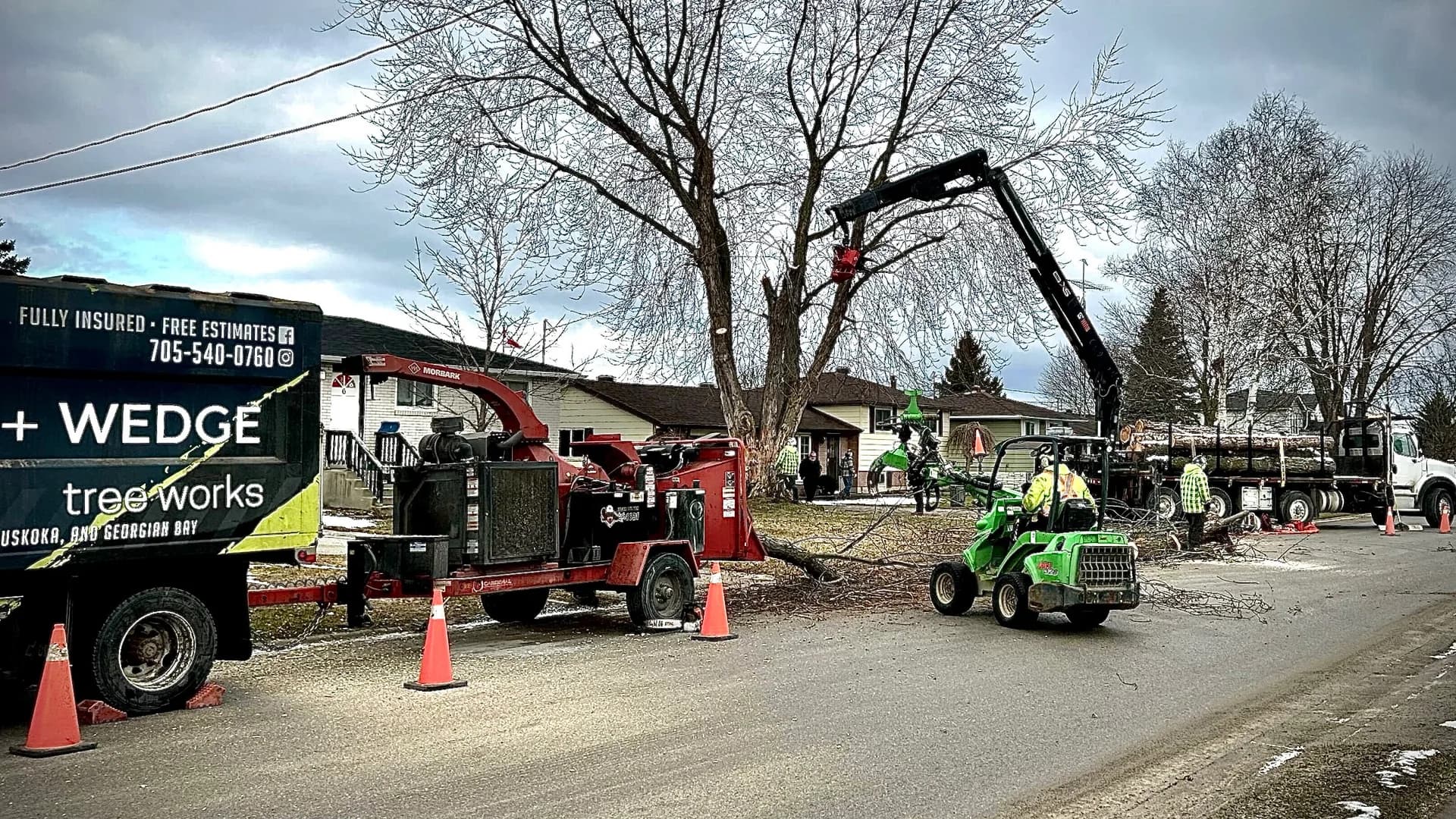
At Axe & Wedge Tree Works, we respond to <a href="/services/hazard-emergency">emergency tree situations</a> across Simcoe County year-round, including nights, weekends, and holidays. We've helped hundreds of homeowners through exactly this scenario. Here's the step-by-step process we recommend.
Step 1: Ensure Everyone's Safety
This is the only thing that matters in the first five minutes. Account for every person and pet in the home. If the tree has compromised the structural integrity of the building — visible sagging in the ceiling, walls buckling, or the tree is still moving — evacuate immediately. Do not go into rooms directly beneath the impact zone. If you smell gas, leave the house and call 911 from outside. If power lines are down or the tree is in contact with electrical service lines, stay away from the tree and any metal objects it's touching. Call 911 and your utility provider.Step 2: Document Everything Before Touching Anything
Once everyone is safe, pull out your phone and start taking photos and video — from every angle you can safely access. Photograph the tree, the damage to the roof and structure, any damage to the interior, and any personal property that's been affected. This documentation is critical for your insurance claim. Do this before any cleanup or removal begins.Step 3: Call Your Insurance Company
In Ontario, homeowner's insurance policies generally cover damage caused by falling trees — even if the tree was healthy before it fell. Call your insurer's claims line as soon as possible. Key things to know: your policy likely covers the cost of removing the tree from the structure (not just the damage repair), emergency tarping to prevent further water damage is typically covered as a "mitigation" expense, and you do not need the insurer's permission to take emergency steps to prevent further damage — but document everything and keep all receipts.Most Ontario insurers will assign an adjuster within 24 to 48 hours. Some may ask you to get estimates for the tree removal before authorising the work. Others will tell you to proceed with emergency removal immediately and submit the invoice. Ask your claims representative which process applies to your policy.
Step 4: Call a Qualified Arborist for Emergency Removal
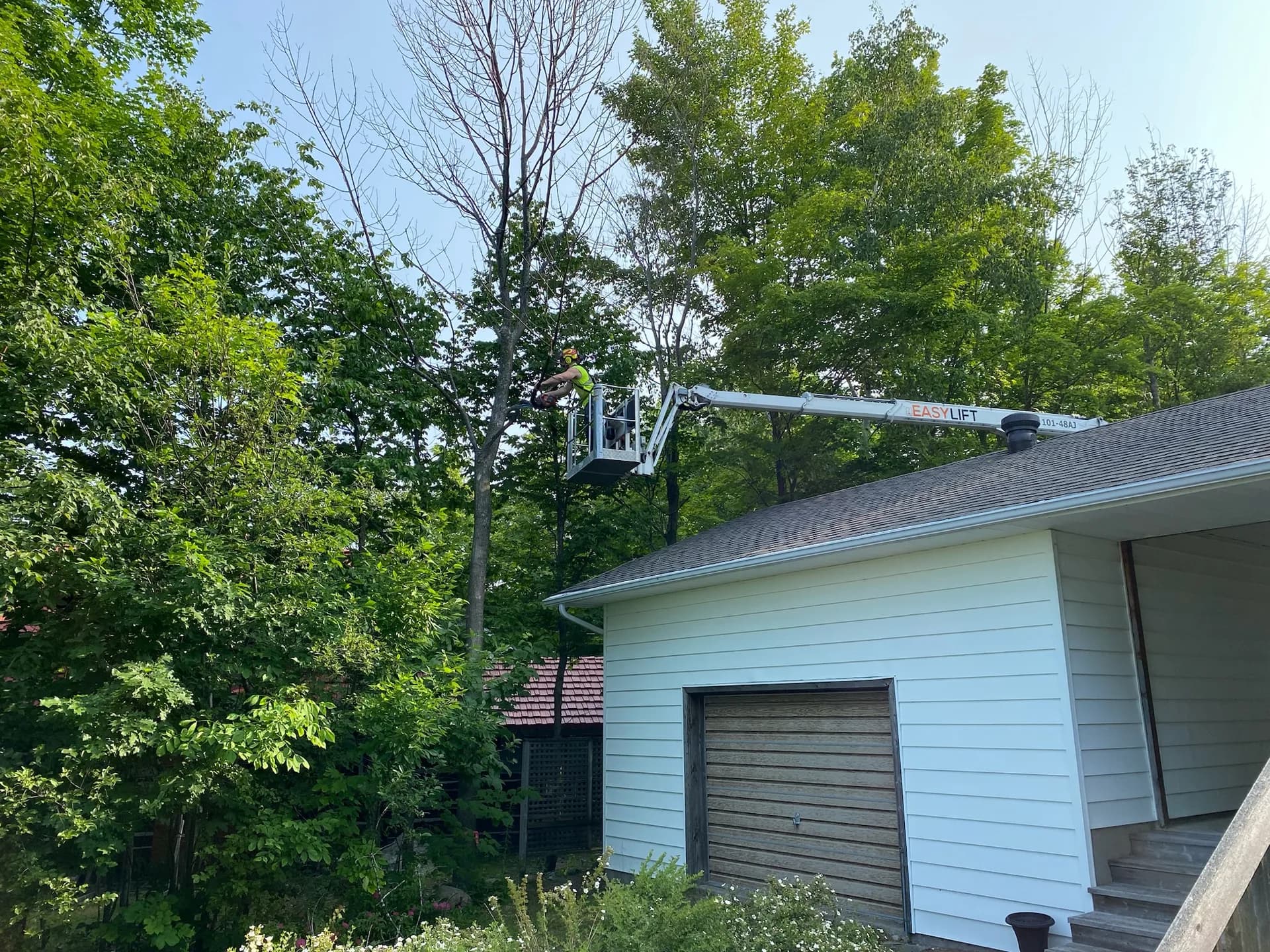
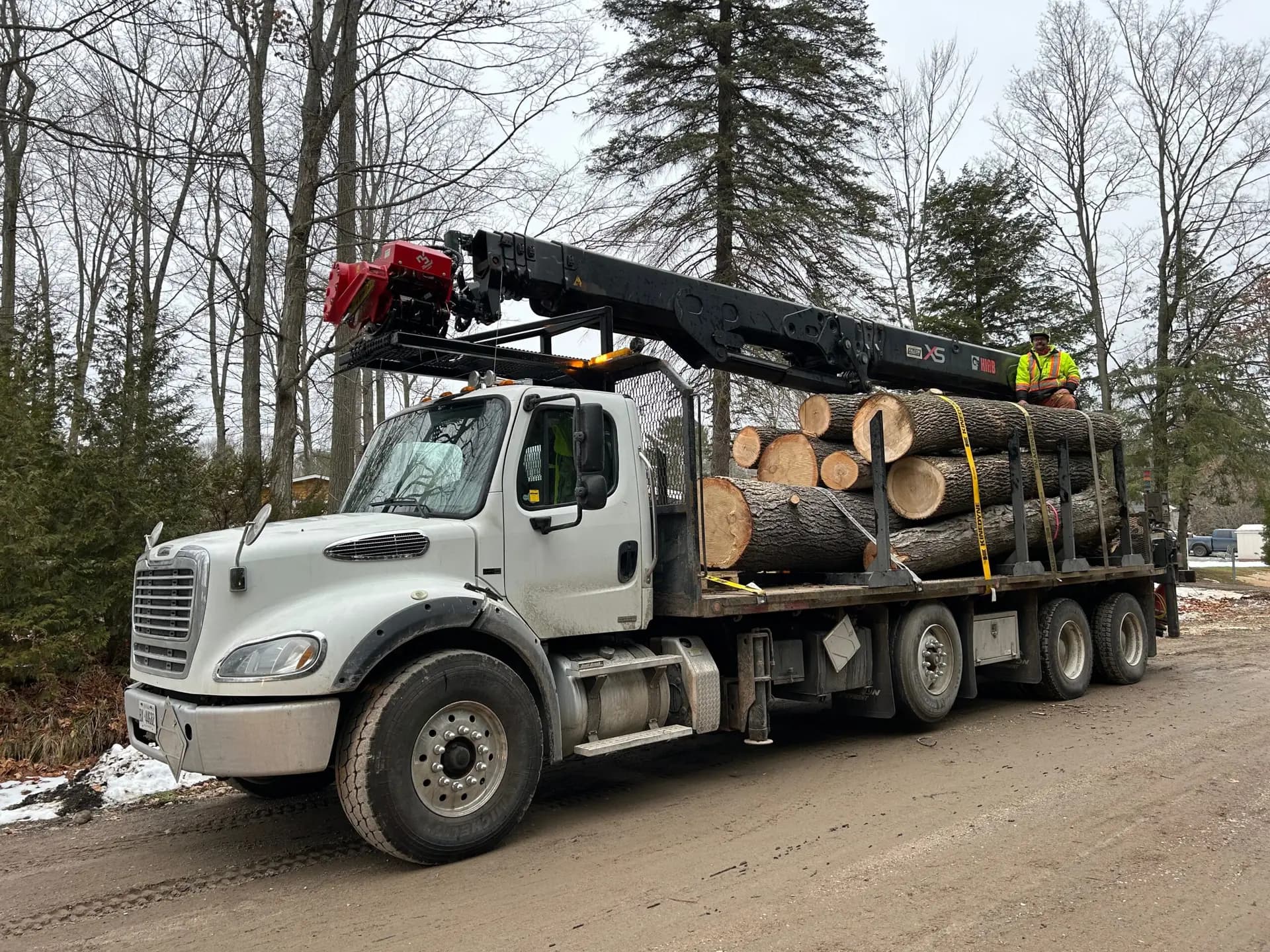
Do not attempt to remove a tree from your roof yourself. A tree resting on a structure is under unpredictable tension and compression forces — cutting in the wrong place can cause the tree to shift, roll, or drop further into the building. This is specialised work that requires experience, rigging equipment, and often a crane. At Axe & Wedge, our emergency response team is available 24/7. Call us at 705-540-0760 and we'll dispatch a crew as quickly as conditions allow — typically within hours for active emergencies.Step 5: Emergency Tarping
If the roof is breached and rain or snow is forecast, emergency tarping is the immediate priority after or concurrent with tree removal. A heavy-duty tarp secured over the damaged area will prevent water intrusion from compounding the structural damage. This is something our crews handle as part of the emergency response — we carry tarps and the hardware to secure them on every emergency call. Keep the receipt; your insurer will reimburse tarping as a mitigation expense.What to Expect: Timeline and Costs
Emergency tree removal from a structure typically takes 4 to 8 hours depending on the size of the tree and complexity of the situation. If a crane is needed, it may take slightly longer to mobilise. Costs for emergency removal from a structure in Simcoe County generally range from $2,500 to $8,000, depending on the tree size, equipment required, and extent of structural involvement. This is higher than standard tree removal because it requires more care, more equipment, and often after-hours labour.After the Removal: Next Steps
Once the tree is off the structure and the roof is tarped, the immediate crisis is over. Your next steps are: get a structural assessment from a licensed contractor to determine the extent of the damage; work with your insurance adjuster on the repair estimate; if stump grinding is needed, that can be scheduled for a later date — it's not part of the emergency response; and consider having the remaining trees on your property assessed. Storms that bring down one tree often stress neighbouring trees as well.If a tree has fallen on your home — or you have a tree you're worried about during the next storm — call Axe & Wedge Tree Works at 705-540-0760. We provide 24/7 emergency response across Simcoe County, backed by 598 five-star reviews and $5M in insurance coverage. We'll get you through it.