In Simcoe County, winter is the most productive season for tree pruning. Temperatures in our Zone 5b climate regularly drop below –20°C between December and March, driving deciduous trees into full dormancy. During this window, pruning causes the least biological stress, reduces the risk of pathogen transmission, and gives our crews the clearest view of branch structure. Since 2017, our team at Axe & Wedge Tree Works has completed over 2,449 jobs across the region — and a significant share of our pruning work is booked between January and early March for exactly these reasons.
1. Dormancy Minimizes Stress and Promotes Spring Recovery
When a tree is dormant, sap flow slows to a near halt. Pruning cuts made during this period lose far less sap than cuts made in spring or summer. This is especially important for species like sugar maples and birch, which bleed heavily if pruned after sap begins rising in late March. In Simcoe County, dormancy typically runs from late November through mid-April, though the exact window shifts by a week or two depending on Georgian Bay lake-effect conditions and elevation. A dormant-season cut seals faster once spring growth resumes, because the tree channels energy into wound compartmentalization rather than competing with active leaf production.2. Fungal and Bacterial Diseases Are Far Less Active
Many of the pathogens that threaten Simcoe County trees — including the fungi behind oak wilt, apple scab, and anthracnose — are dormant or far less mobile in cold temperatures. Pruning in winter dramatically reduces the chance of introducing infection through fresh cuts. For oaks specifically, the Ontario Ministry of Natural Resources recommends avoiding pruning between April 15 and October 15, because the Nitidulid beetles that spread the oak wilt fungus (Bretziella fagacearum) are active during warm months. Our arborists schedule all oak pruning for the December-to-March window to eliminate this vector entirely. Dutch elm disease follows a similar pattern: the bark beetles that transmit the Ophiostoma fungus are inactive in winter, making it the safest time to prune elms.3. Bare Canopies Give Arborists a Complete Structural Picture
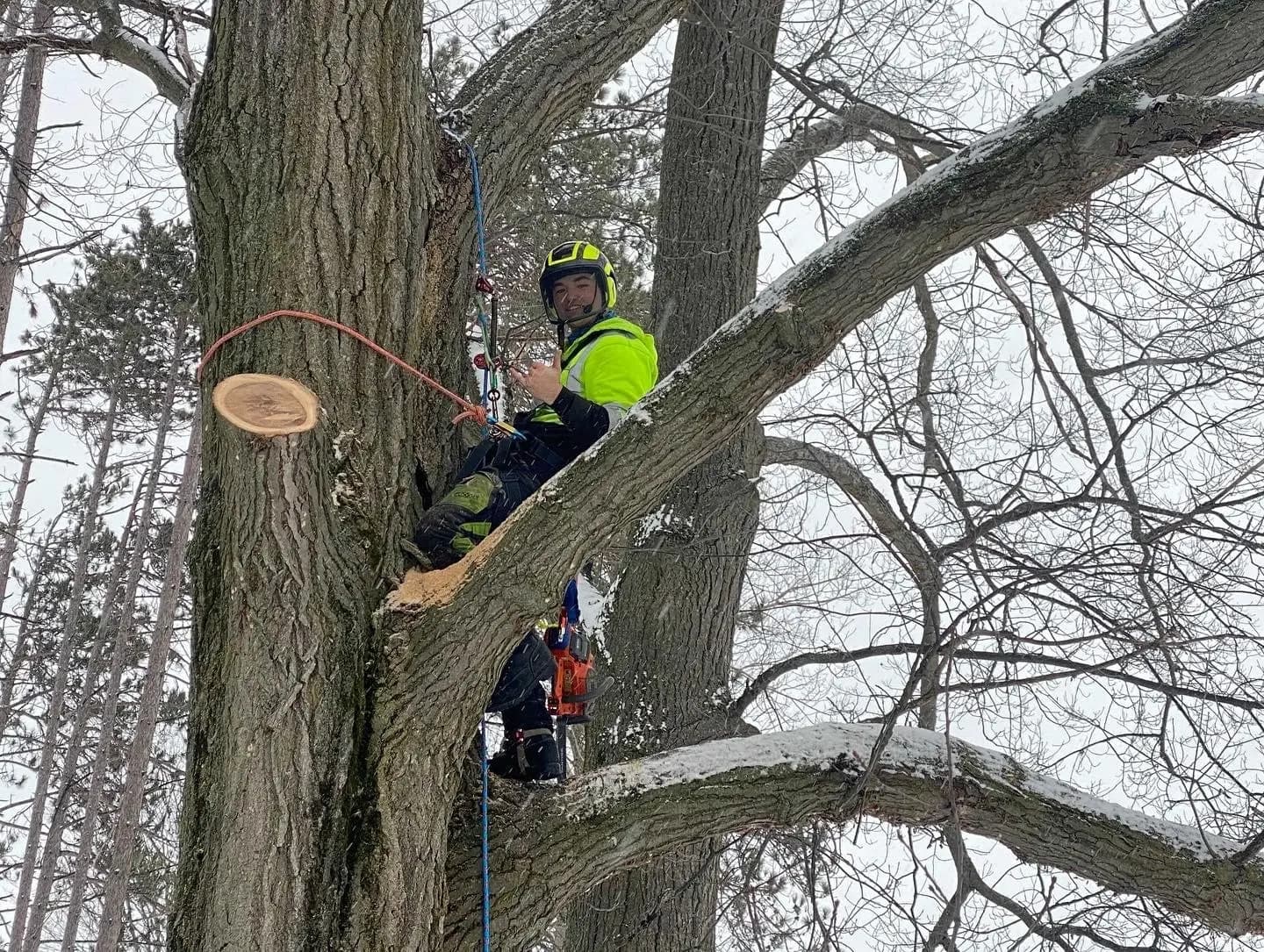
Without foliage obscuring the branch architecture, our arborists can identify problems that are invisible during the growing season. Crossing branches, included bark unions (where two stems grow together and trap bark between them, creating a structural weak point), deadwood, and early signs of decay are all far easier to spot on a bare tree. This matters in Simcoe County, where Georgian Bay lake-effect snow and ice storms regularly load branches with 15–25 kg of accumulated weight per linear metre. A branch with an included bark union that looks fine in July can split catastrophically under a February ice load. Winter inspection and pruning lets us address these defects before they cause failures.4. Frozen Ground Protects Your Property
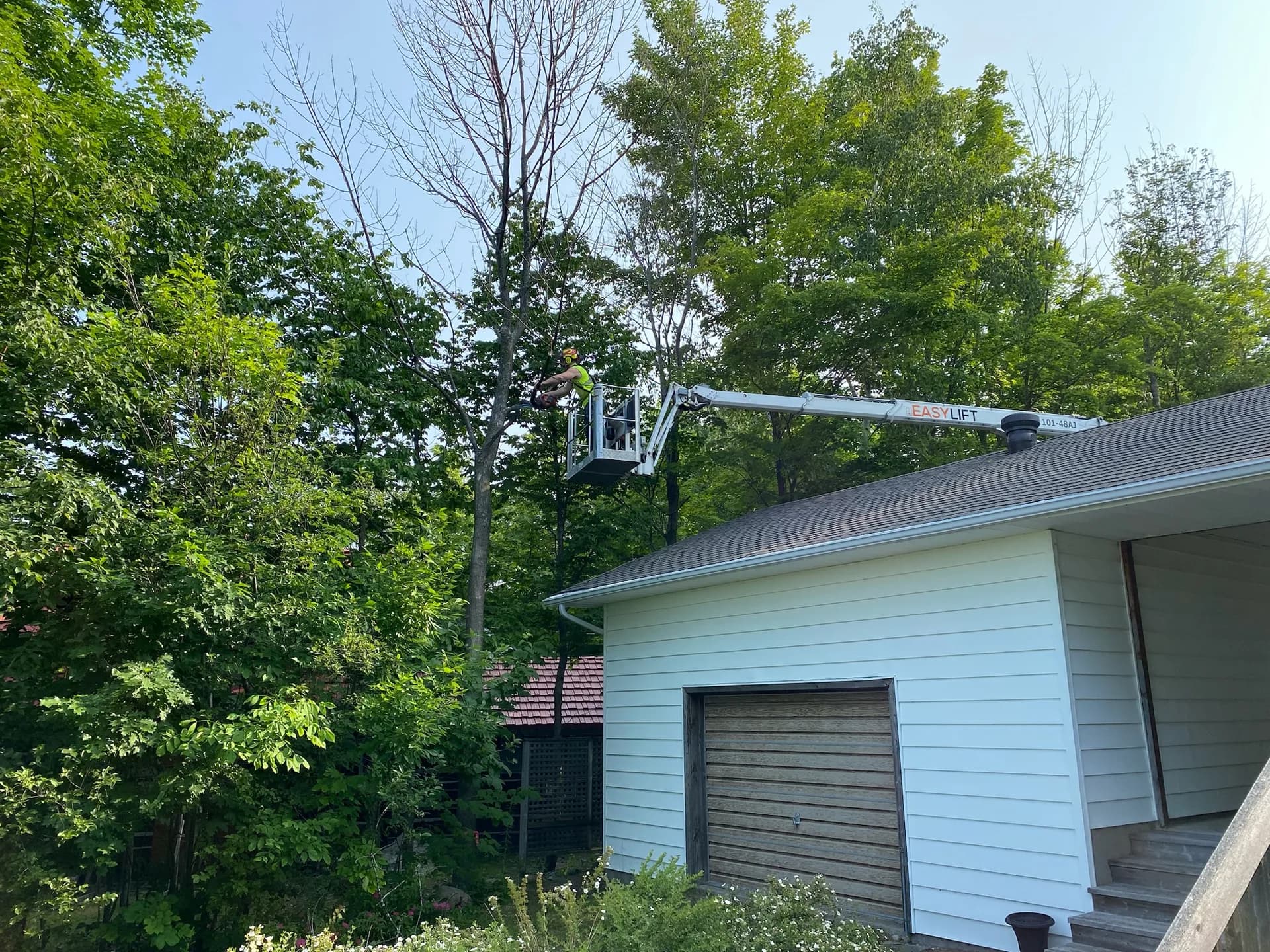
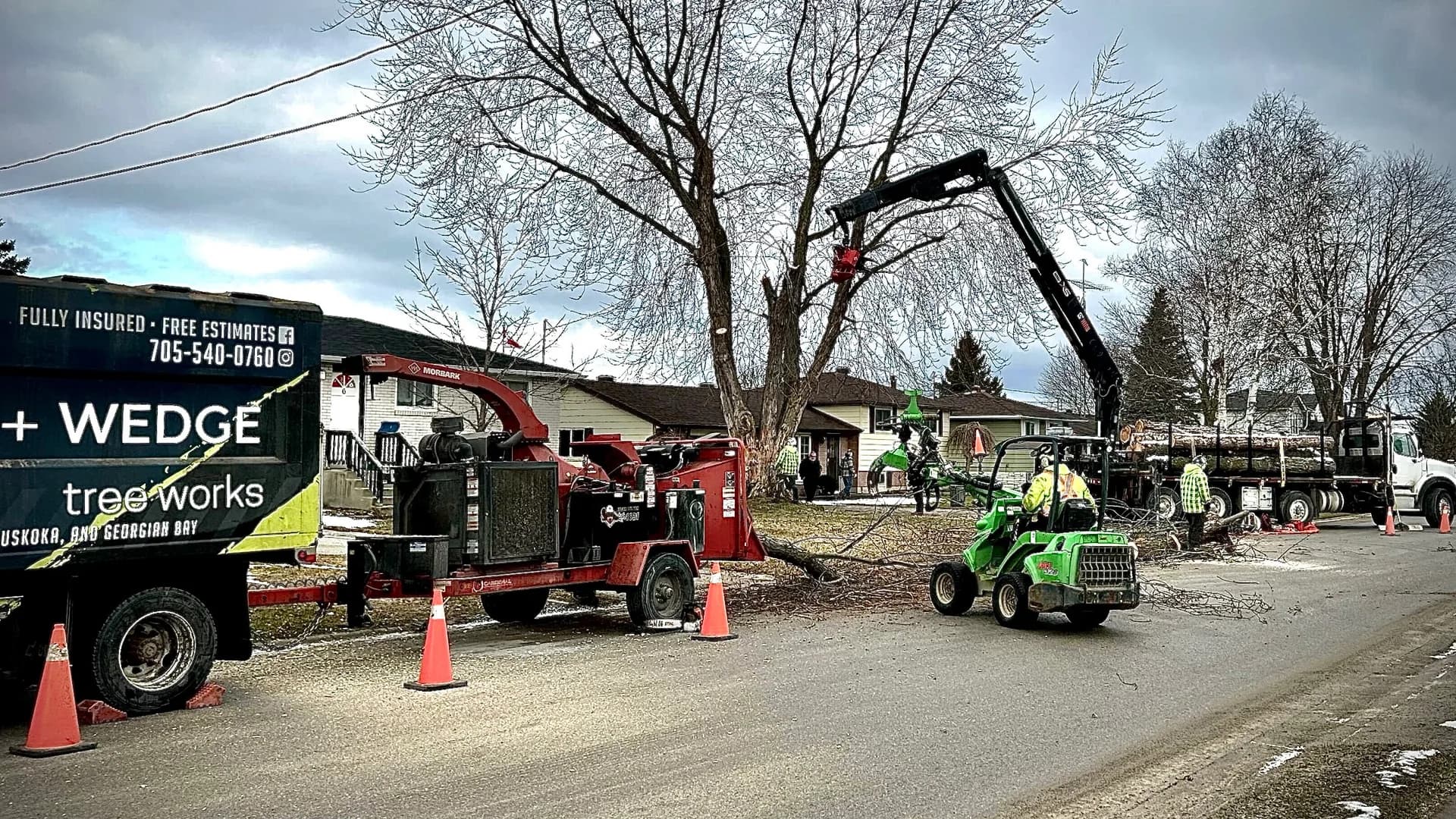
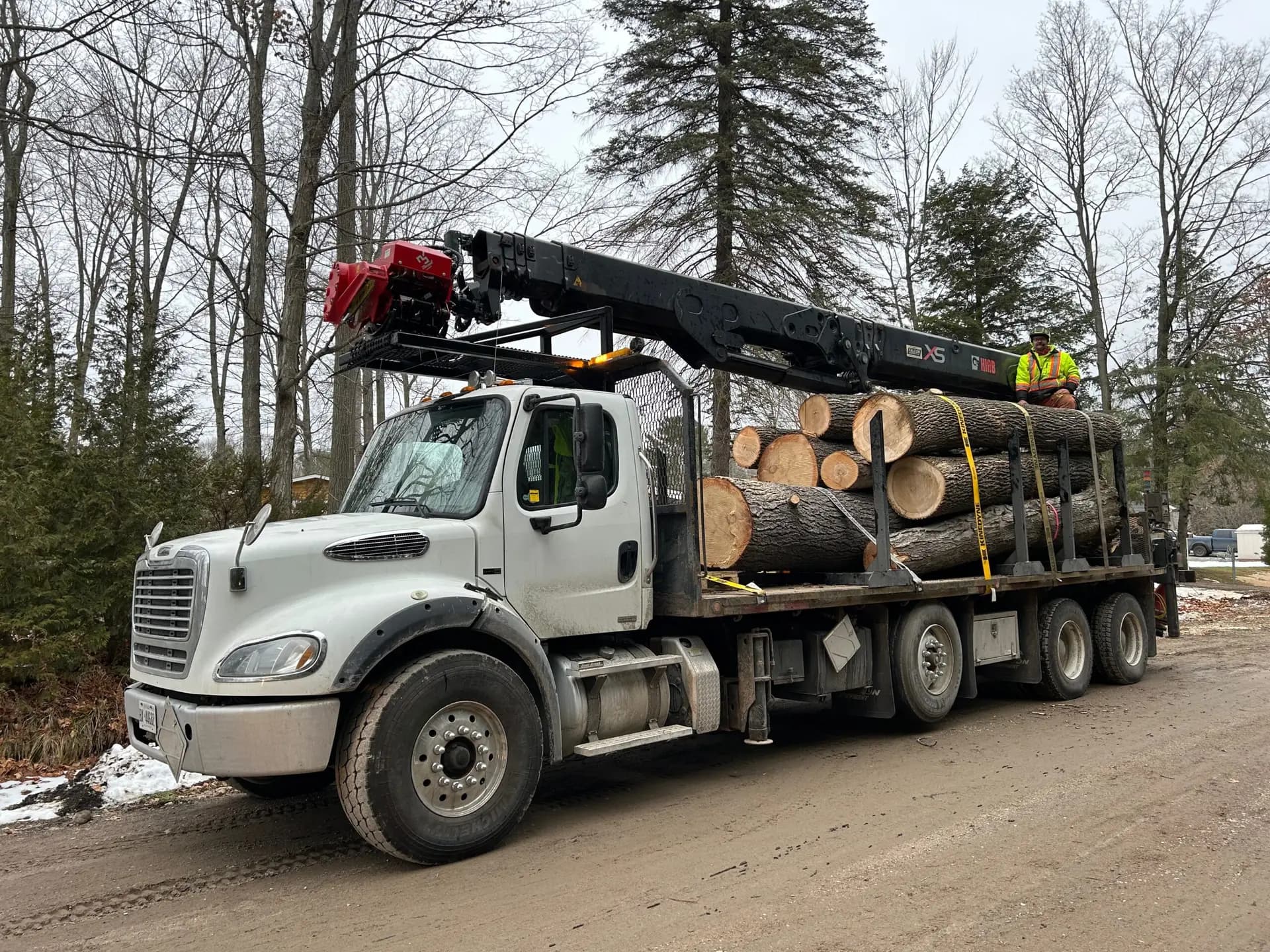
Heavy equipment — bucket trucks, chippers, and log loaders — can tear up soft ground in spring and fall. In Simcoe County's clay-heavy soils (common in Midland, Penetanguishene, and the Tiny Township shoreline), ruts from equipment can take an entire season to repair. Frozen ground solves this. When we schedule pruning for January or February, our trucks drive over rock-hard soil and leave virtually no trace. For lakefront properties along Georgian Bay, where lawns are often narrow and heavily landscaped, this is a significant practical advantage.5. Pest Cycles Are Interrupted
Emerald ash borer (EAB) has devastated ash tree populations across Simcoe County since arriving in the region around 2013. While EAB-infested trees often require removal rather than pruning, proper dormant-season pruning of surviving ash can improve vigour and extend the tree's useful life when combined with TreeAzin injections. Beyond EAB, winter pruning removes overwintering egg masses and larvae of other pests — tent caterpillars, gypsy moth (now called LDD moth), and cankerworms — that shelter in bark crevices and branch junctions. Removing these branches during winter breaks the pest life cycle before spring emergence.6. Species-Specific Timing Gets the Best Results
Not all trees respond to winter pruning the same way. Here is the timing we follow for the most common species in Simcoe County:Sugar maple and red maple: Prune December through mid-February, well before sap flow begins. Maples pruned after mid-March can bleed heavily, though the bleeding itself does not harm the tree — it is primarily a cosmetic and homeowner concern.
Red oak, white oak, and bur oak: Prune November through March only. Never prune oaks during the growing season due to oak wilt transmission risk.
White ash and green ash: Prune November through March. Avoid April–September when adult EAB beetles are active and fresh pruning wounds can attract them.
White pine and spruce: These conifers can be pruned year-round, but dormant pruning minimizes sap flow and resin bleeding. For white pine weevil management, remove affected leaders in late winter before adults emerge.
Apple and ornamental crabapple: Prune late February through mid-March, after the coldest weather but before bud break. This timing reduces fire blight infection risk while allowing rapid wound closure.
Eastern white cedar (arborvitae): Light shaping is best done in early spring, but structural pruning to remove heavy snow-damaged limbs should happen as soon as conditions allow.
How to Prepare Your Property for Winter Pruning
Before your arborist arrives, clear access to the trees being pruned. Move vehicles, patio furniture, and any items stored under the canopy. Mark any underground utilities, irrigation lines, or septic components near the work zone. If the trees are on a slope or near the waterfront, let the crew know — our team regularly works on steep Georgian Bay bluff properties and can plan rigging accordingly. A clear work zone speeds up the job and reduces cost.When Not to Prune in Winter
There are a few exceptions. Spring-flowering ornamentals like lilac, magnolia, and serviceberry set their flower buds on the previous season's growth. Pruning them in winter removes next spring's blooms. For these species, prune immediately after flowering in late May or early June. Also avoid pruning during extreme cold snaps below –25°C, as brittle wood can crack unpredictably and fresh cuts are exposed to severe desiccation.If you are unsure whether your trees need winter pruning, call Axe & Wedge Tree Works at 705-540-0760. We provide free on-site assessments throughout Simcoe County — Barrie, Midland, Penetanguishene, Orillia, Collingwood, Wasaga Beach, and Tiny Township. With 598 five-star Google reviews and over 4,418 clients served since 2017, our qualified arborists will give you a straight answer on what your trees need and the best time to do it.