
If you own property in Simcoe County, there is a strong chance you have at least one pine tree on your lot. Eastern white pines and red pines are native to this region and have been a defining feature of the Georgian Bay landscape for centuries. They grow tall, they grow fast, and they provide excellent privacy and wind protection — until they don't.
Pine trees are among the most common species we remove at Axe & Wedge Tree Works, and for good reason. When a pine reaches maturity — often topping 25 metres in height — it can become a serious liability if it's growing near a home, garage, septic system, or power lines. Here's what <a href="/areas/barrie">Barrie</a> and Simcoe County homeowners need to know about pine tree removal.
White Pine vs Red Pine: Key Differences
Eastern white pine (Pinus strobus) is the most common pine species in Simcoe County. It grows quickly — often 30 to 50 centimetres per year — and can reach heights of 30 metres or more. White pines have soft, flexible needles in bundles of five and a characteristic irregular crown shape at maturity. Their wood is relatively soft, which means branches can snap under ice and wind loads more easily than hardwoods.Red pine (<em>Pinus resinosa</em>) is shorter and stockier, typically reaching 20 to 25 metres. It has a straighter trunk, denser wood, and needles in bundles of two. Red pines are more wind-resistant than white pines but produce significantly more sap, which complicates cleanup during removal.
Why Pine Trees Often Need Removal
There are several situations where pine removal becomes necessary rather than optional. Storm damage is the most common trigger — pines have relatively shallow root systems compared to oaks and maples, making them more vulnerable to uprooting in high winds. A pine that has lost its top or suffered a major trunk split is typically not salvageable. Root system conflicts with foundations, septic beds, and driveways are another frequent issue, particularly with white pines whose roots spread aggressively in sandy Simcoe County soils.Pines are also susceptible to <strong>white pine blister rust</strong>, a fungal disease that causes cankers on branches and the trunk, eventually girdling and killing the tree. Once blister rust reaches the main trunk, removal is the only option. Additionally, mature pines growing within striking distance of a home present a <strong>wind-throw risk</strong> that many homeowners understandably want to eliminate.
When Pruning Is Enough
Not every problematic pine needs to come down. If the issue is limited to dead lower branches, a canopy that's blocking light, or minor storm damage in the upper crown, professional pruning can address the problem without sacrificing the tree. Crown cleaning — removing dead, dying, and broken branches — is often sufficient for pines that are otherwise healthy and structurally sound.However, pines do not respond well to heavy crown reduction. Unlike deciduous trees, pines cannot regenerate foliage from old wood. If you cut back into bare branches, that section of the tree will remain bare permanently. This limits the pruning options for pines that have outgrown their space.
Cost Factors for Pine Tree Removal in Simcoe County
Pine removal costs in Simcoe County typically range from $800 for a small pine in an open area to $5,000 or more for a large white pine near a structure. The main factors that affect pricing are: Height and diameter — a 30-metre white pine requires crane work and significantly more time than a 15-metre red pine. Proximity to structures — trees near houses, garages, or power lines require rigging and controlled lowering of every piece, which is labour-intensive. Access — if equipment cannot reach the tree, the crew may need to climb and rig the entire removal by hand. Stump size — pine stumps are generally easier to grind than hardwood stumps, but large pines can have root flares over a metre across.Sap and Cleanup Considerations
Pine sap is one of the less pleasant aspects of pine removal. It gets on everything — equipment, clothing, driveways, and decks. At Axe & Wedge, we take precautions to protect surfaces and include full cleanup with every job, but it's worth knowing that sap residue on nearby surfaces may require additional attention after the crew leaves. Pressure washing or a citrus-based solvent will handle most sap stains.What to Expect During the Job
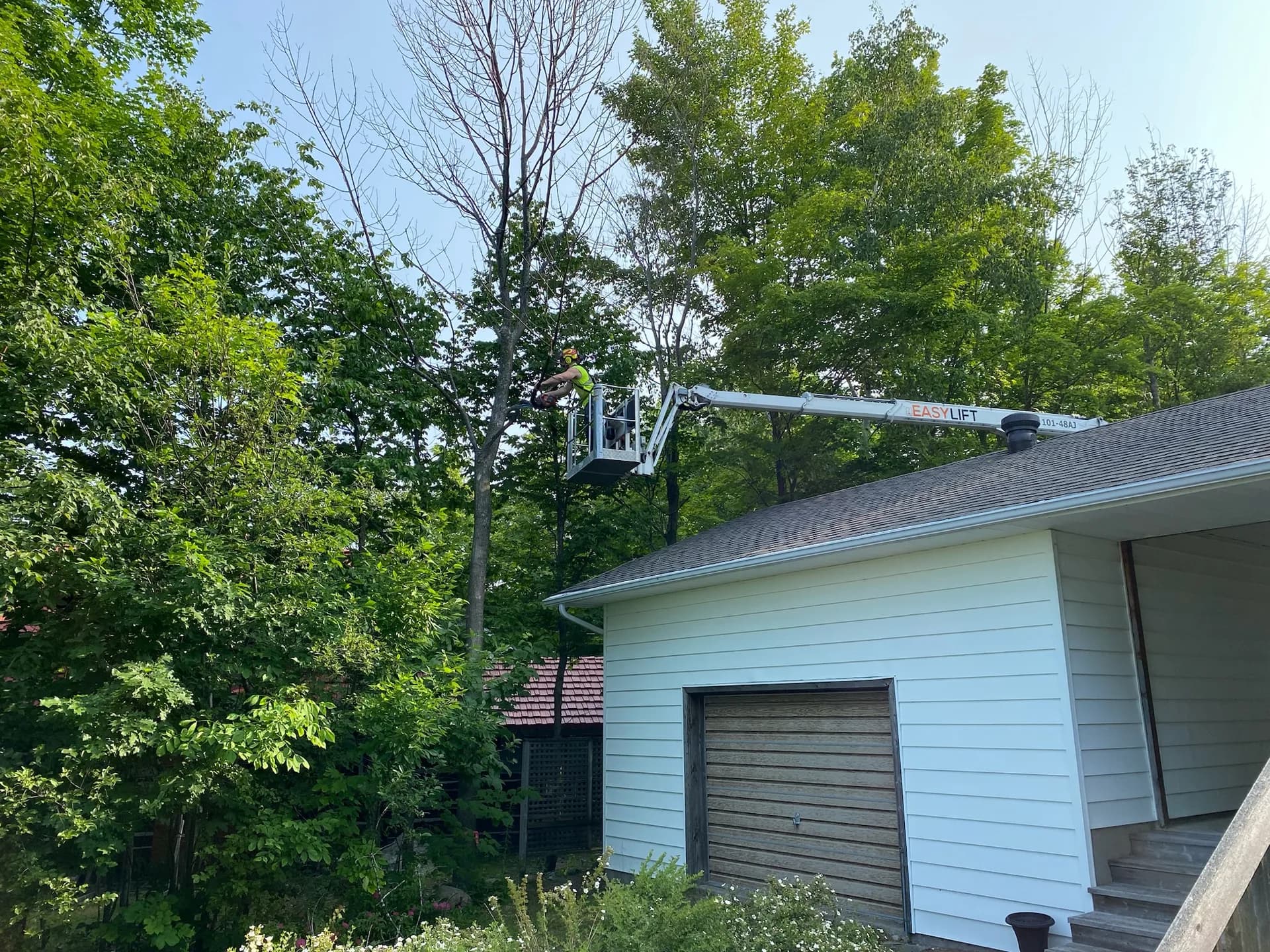
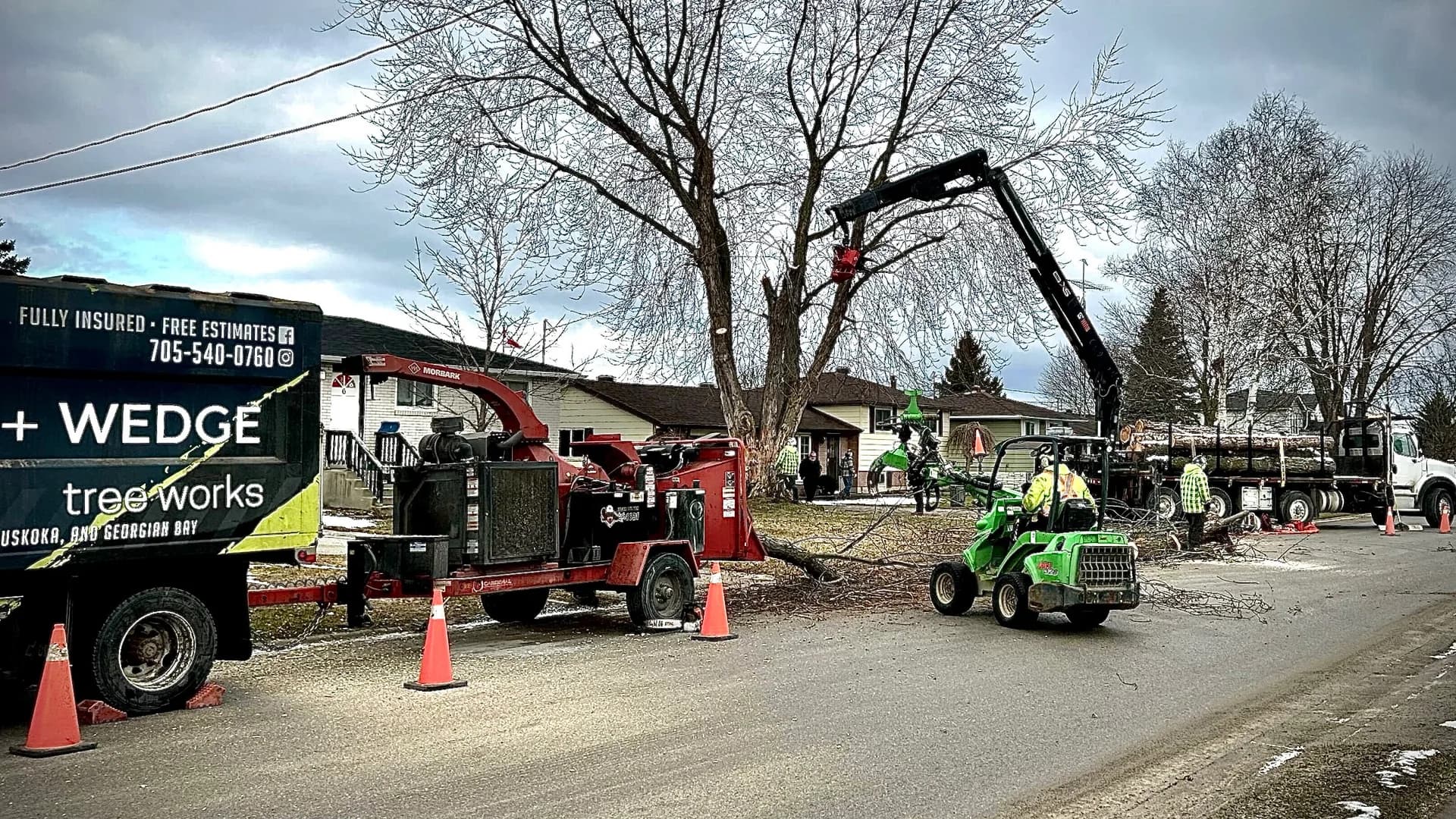
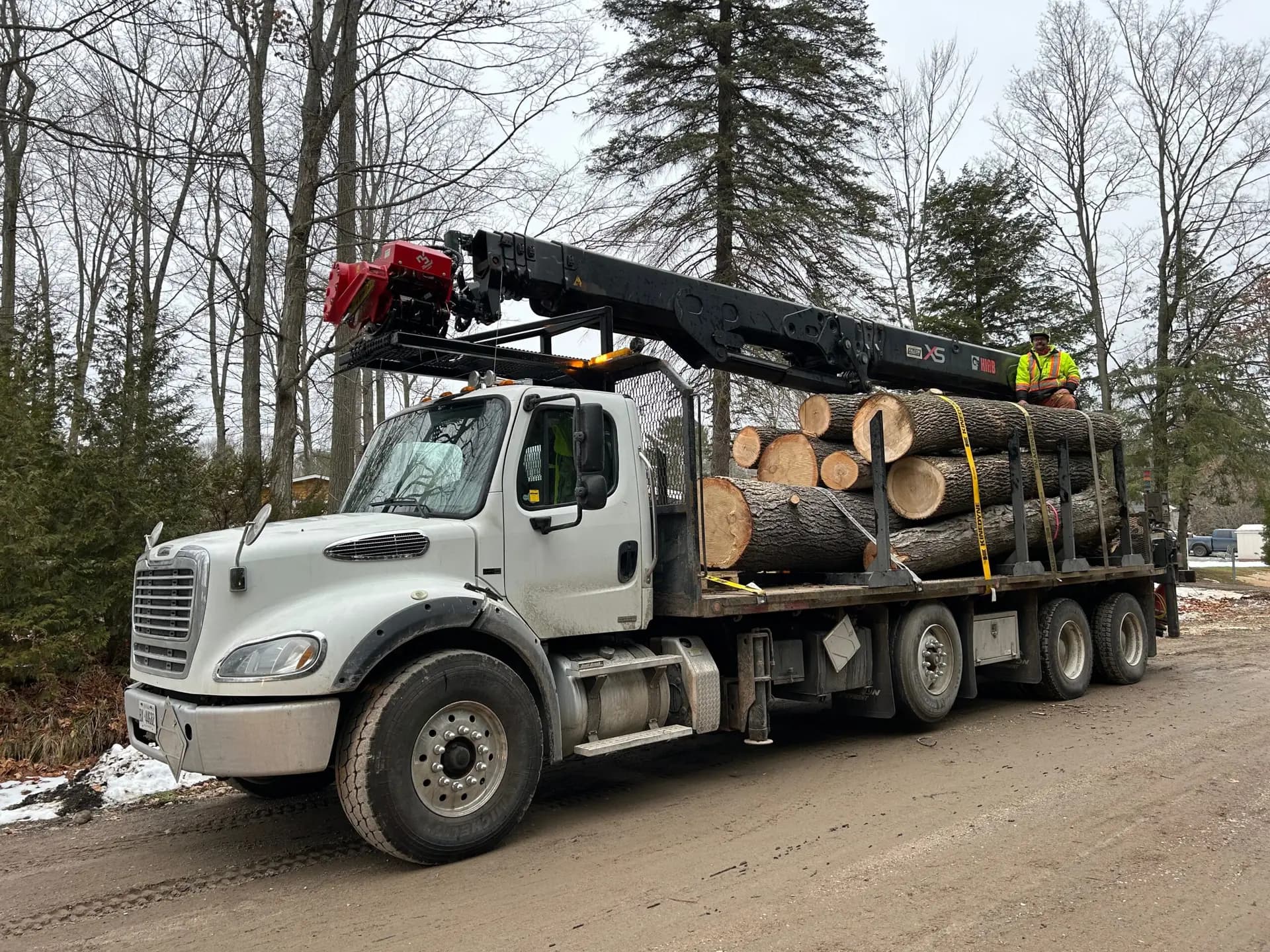
For a standard pine removal in a residential setting, our crew will arrive with a chipper, one or two trucks, and either a crane or bucket truck depending on the tree's location and size. The tree is dismantled in sections from the top down, with each piece either lowered on ropes or cut to fall into a clear drop zone. Brush is chipped on site, and logs are either hauled away or cut into firewood lengths if requested. The typical timeline is half a day to a full day for a single large pine.If you have a pine tree on your property that's causing concern — whether it's leaning, damaged, too close to your home, or simply too large — call Axe & Wedge Tree Works at 705-540-0760 for a free on-site assessment. We've been providing <a href="/services/tree-removal">tree removal</a> across Simcoe County since 2017, backed by 598 five-star reviews and $5M in insurance coverage.