
If you live in Simcoe County, oaks and maples are almost certainly part of your property's landscape. Red oaks, bur oaks, sugar maples, and red maples are among the most common hardwood species in the region, and they're also among the most valuable — both ecologically and in terms of property value. A single mature oak or maple in good health can add thousands of dollars to your home's assessed value.
But these trees aren't maintenance-free. Each species has specific care requirements, disease vulnerabilities, and pruning rules that, if ignored, can lead to decline or failure. As qualified arborists who work with these species daily across Simcoe County, here's what we recommend every homeowner know.
Oak Trees: Timing Is Everything
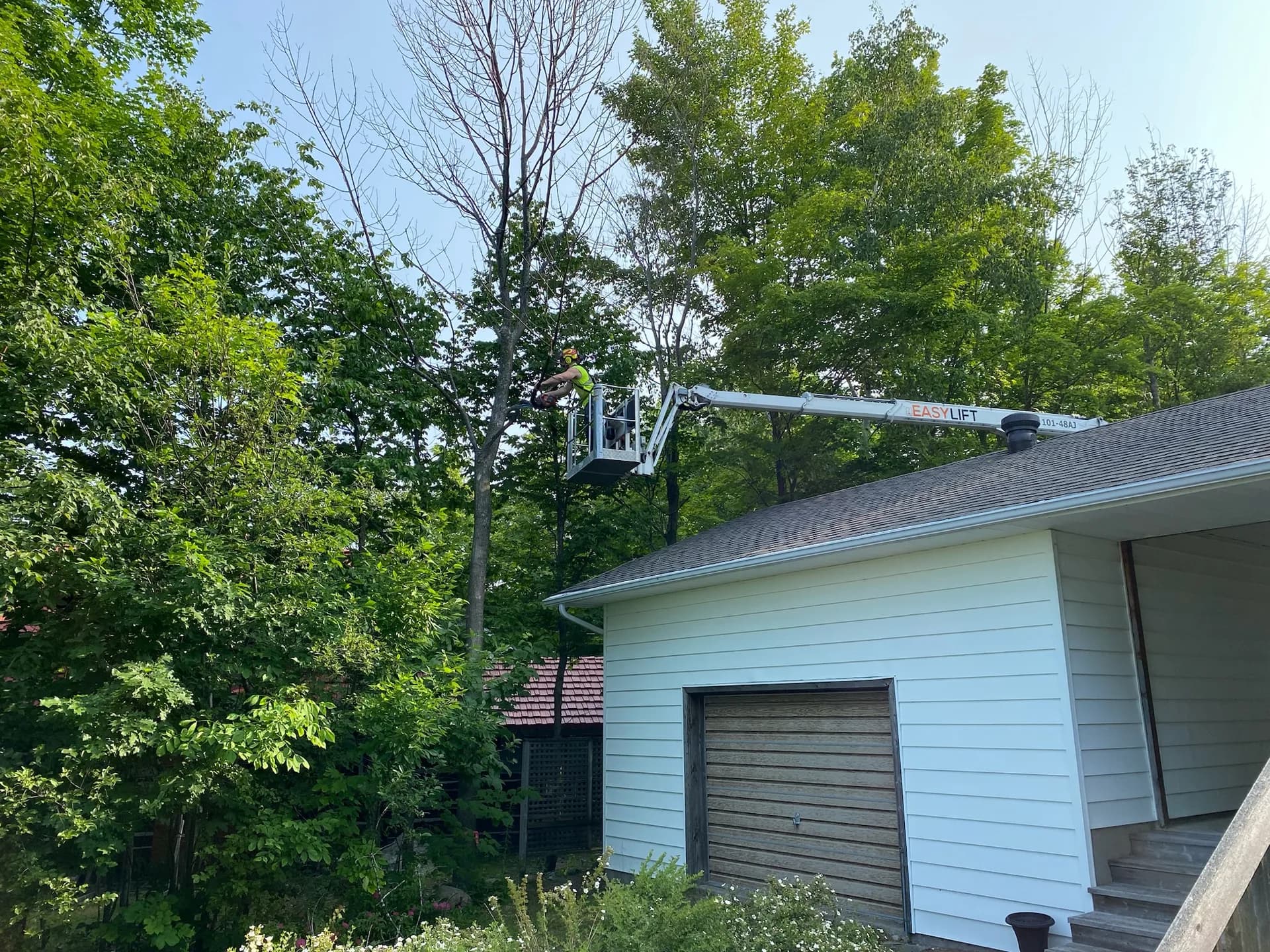
The single most important rule for oak tree care in Ontario is this: never prune oaks between April and October. This isn't a suggestion — it's a critical disease prevention measure. Oak wilt (Ceratocystis fagacearum) is a fungal disease that has been devastating oak populations across North America. The fungus is spread by sap beetles that are attracted to fresh pruning wounds during the warm months. Once a tree is infected, oak wilt can kill a red oak within a single growing season.The only safe window for oak pruning in Ontario is during the dormant season — ideally January and February when temperatures are consistently below freezing and beetle activity is zero. If your oak needs structural pruning, crown cleaning, or deadwood removal, schedule it for midwinter. Emergency removal of a broken or dangerous branch is the only exception to this rule.
Beyond pruning timing, oaks benefit from occasional crown cleaning to remove dead and crossing branches, which improves air circulation and reduces disease pressure. Oaks are generally low-maintenance trees that can thrive for centuries with minimal intervention — provided that intervention is timed correctly.
Maple Trees: Common Problems in Simcoe County
Sugar maples and red maples are resilient trees, but they face several common issues in our region. Tar spot is the most visible — those black blotches on maple leaves every autumn. The good news is that tar spot is cosmetic and doesn't affect tree health. No treatment is necessary. Raking and disposing of fallen leaves in autumn can reduce spore load the following year.A common myth worth addressing: tapping sugar maples for syrup does not harm the tree when done correctly. A single tap in a healthy maple with a diameter of at least 25 centimetres causes negligible damage. The tap hole heals within one to two growing seasons. However, over-tapping — multiple taps in a small tree or tapping a stressed tree — can contribute to decline.
Signs Your Oak or Maple Needs Professional Attention
Call a qualified arborist if you observe any of the following: leaves wilting or browning from the edges inward during the growing season (potential oak wilt or maple decline); large dead branches in the crown; fungal conks or mushrooms growing at the base or on the trunk; bark peeling away from the trunk to reveal dead wood underneath; a sudden lean that wasn't present before; or significant root damage from recent construction or landscaping.When Removal Becomes Necessary
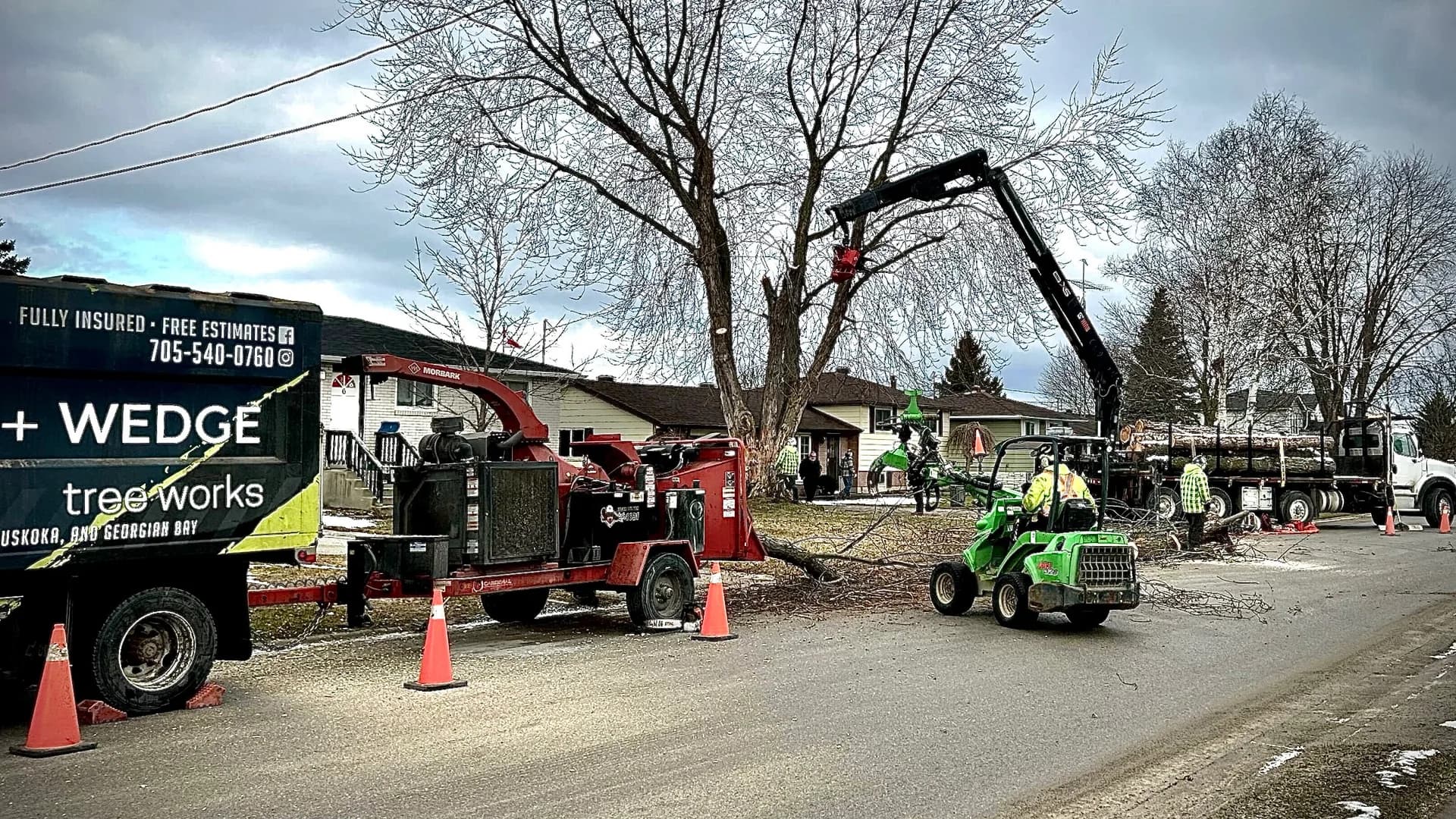
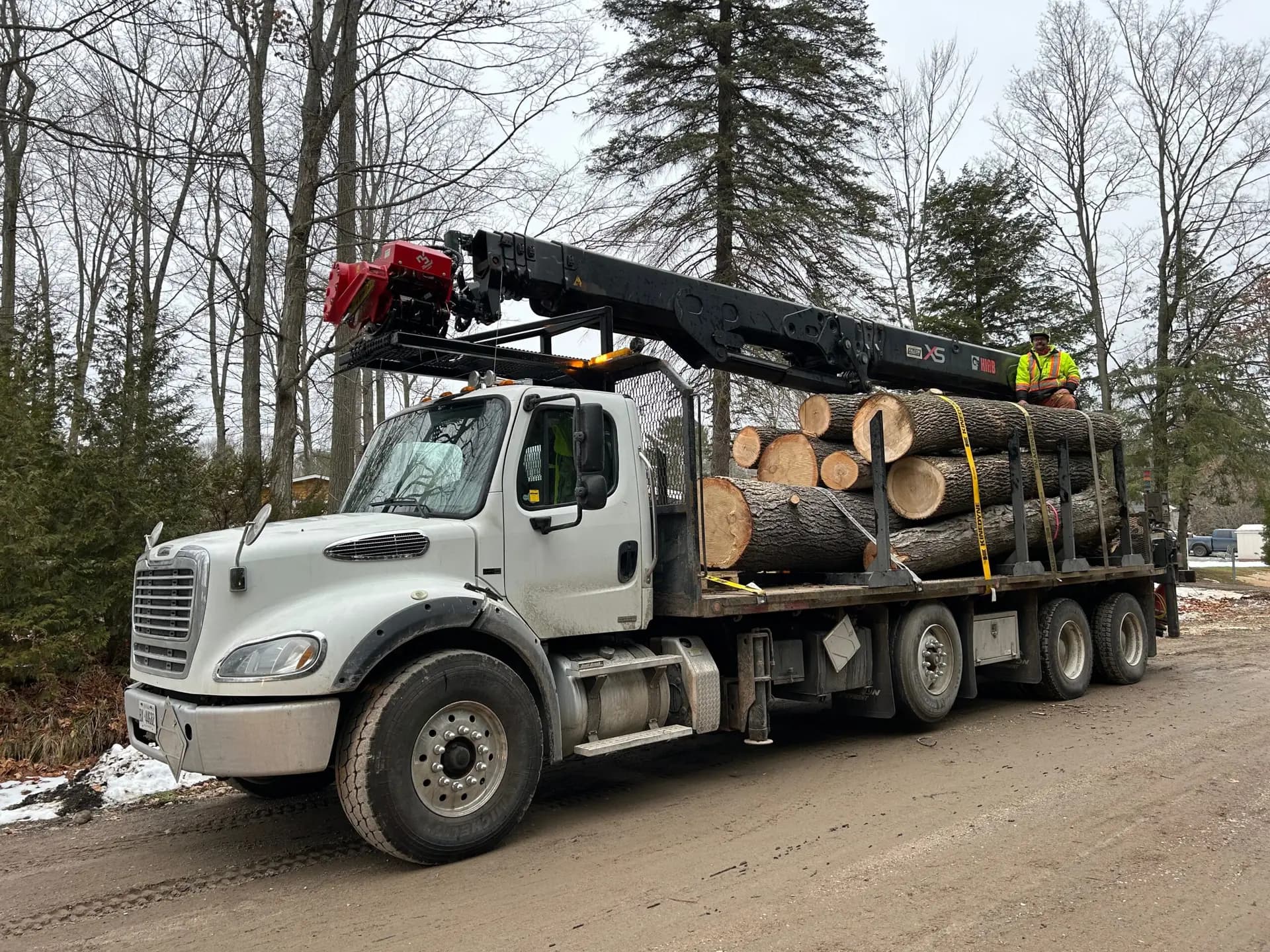
Neither oaks nor maples should be removed lightly — these are long-lived, high-value trees. But there are clear thresholds. If more than 50 percent of the crown is dead or dying, if the trunk has significant structural decay (often revealed by large cavities or fungal fruiting bodies), or if the tree has developed an unstable lean with root plate movement, removal is the safest course of action. At Axe & Wedge Tree Works, we always explore whether a tree can be preserved before recommending removal.Pruning Best Practices for Oaks and Maples
For both species, the goal of pruning should be to maintain structural integrity, remove hazards, and promote long-term health — not to reshape the tree for aesthetic purposes. Heavy crown reduction (topping) is never appropriate for oaks or maples and will cause far more harm than good. Proper pruning removes dead, dying, diseased, and crossing branches while preserving the tree's natural form.Maples can be pruned in late winter (February to March) with minimal sap flow issues. Yes, maples will weep sap from pruning wounds in late winter and early spring — this looks alarming but causes no meaningful harm to the tree. The sap flow stops on its own within a few weeks as the tree leafs out.
If you have oaks or maples on your Simcoe County property that need attention, the team at Axe & Wedge Tree Works can help. We provide free on-site assessments and honest recommendations — whether that means pruning, treatment, or removal. Call us at 705-540-0760 or request a quote online. We're backed by 598 five-star reviews and $5M in insurance coverage.