Hiring a tree removal company is one of the most consequential home-service decisions you will make. A poor choice can result in property damage, personal injury, or liability that your homeowner's insurance will not cover. In Simcoe County — where mature sugar maples, white oaks, white pines, and emerald-ash-borer-ravaged ash trees are part of nearly every residential lot — the stakes are high. This guide walks you through exactly what to expect, what to verify, and what each stage of the process looks like, based on over 2,449 jobs completed by Axe & Wedge Tree Works since 2017.
Why Simcoe County Homeowners Need Tree Removal
The most common reasons we remove trees in Midland, Penetanguishene, Tiny Township, Barrie, Orillia, and Collingwood fall into a few categories. Emerald ash borer (EAB) has devastated the white ash population across Simcoe County — the Canadian Forest Service estimates EAB has killed over 100 million ash trees in North America, and locally, most untreated ash over 20 cm in diameter are already dead or in advanced decline. Ice storms and wind events driven by Georgian Bay and Lake Huron lake-effect weather snap branches and topple weakened trees every winter — Simcoe County sits in USDA Hardiness Zone 5b, where freeze-thaw cycles and heavy wet snow loads are routine from November through March. Mature sugar maples, red oaks, and white pines that have developed structural decay, co-dominant stems, or root-plate failure need proactive removal before they strike a house, vehicle, or person. And lot clearing for new builds — particularly on waterfront properties in Tiny, Tay, and along Severn Sound — requires professional crews with the equipment to handle large-diameter hardwoods.Step 1: Call and Describe the Situation
Start by calling the tree removal company and describing the tree: species (if you know it), approximate height, diameter at chest height, proximity to structures and power lines, and whether the situation is urgent. At Axe & Wedge, our office team fields these calls at 705-540-0760 and can typically schedule an on-site assessment within a few business days — or the same day for emergencies. We provide 24/7 emergency response throughout Simcoe County.Step 2: On-Site Arborist Assessment
A qualified arborist will visit your property to evaluate the tree in person. This assessment covers the species and overall health of the tree, structural integrity (checking for internal decay, co-dominant stems, included bark, and root-plate condition), lean angle and directional fall options, proximity to structures, fences, pools, driveways, gardens, and overhead power lines, access for equipment (can a crane or chipper truck reach the tree?), and whether the tree can be saved through pruning, cabling, or treatment instead of removal. This assessment is free at Axe & Wedge and results in a written quote — never a verbal estimate.Step 3: Verify Insurance, WSIB, and Credentials
Before signing anything, verify three things. First, liability insurance: Ontario has no minimum requirement for tree service contractors, but reputable companies carry at least $2 million in commercial general liability. Ask for a Certificate of Insurance naming you as additionally insured. Second, WSIB (Workplace Safety and Insurance Board) coverage: if a worker is injured on your property and the company lacks WSIB, you — the homeowner — can be held personally liable for medical costs and lost wages. Ask for a current WSIB clearance certificate. Third, qualifications: look for qualified arborists with verifiable credentials and membership in professional organizations such as the International Society of Arboriculture (ISA) or the Tree Care Industry Association (TCIA). In Ontario, there is no provincial licensing for arborists, so industry credentials are the only reliable indicator of training. At Axe & Wedge, we provide all documentation before any work begins. Our 598 Google reviews at a 5.0 rating reflect a consistent standard across 4,418 clients served since 2017.Step 4: Understand the Removal Plan
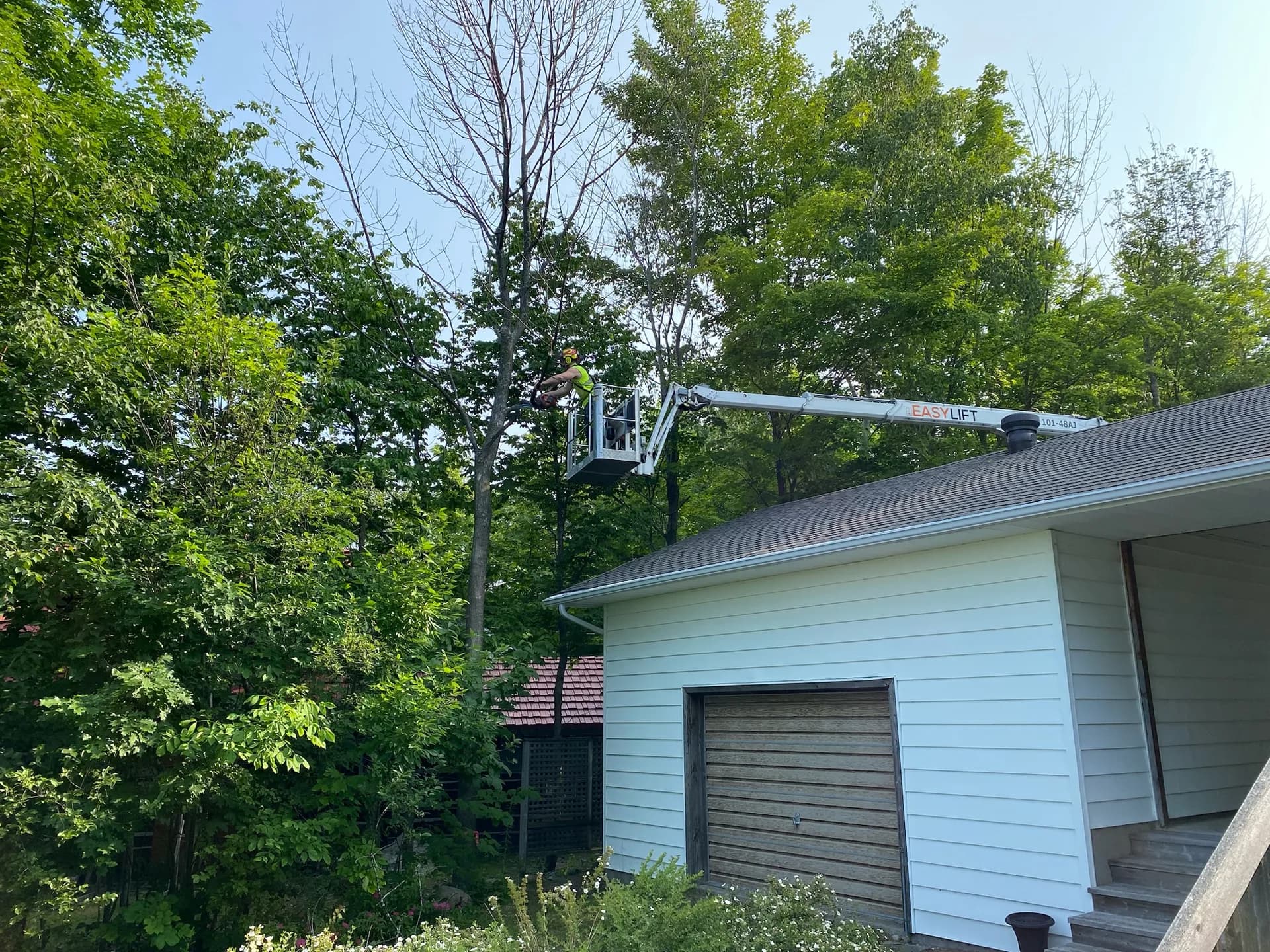
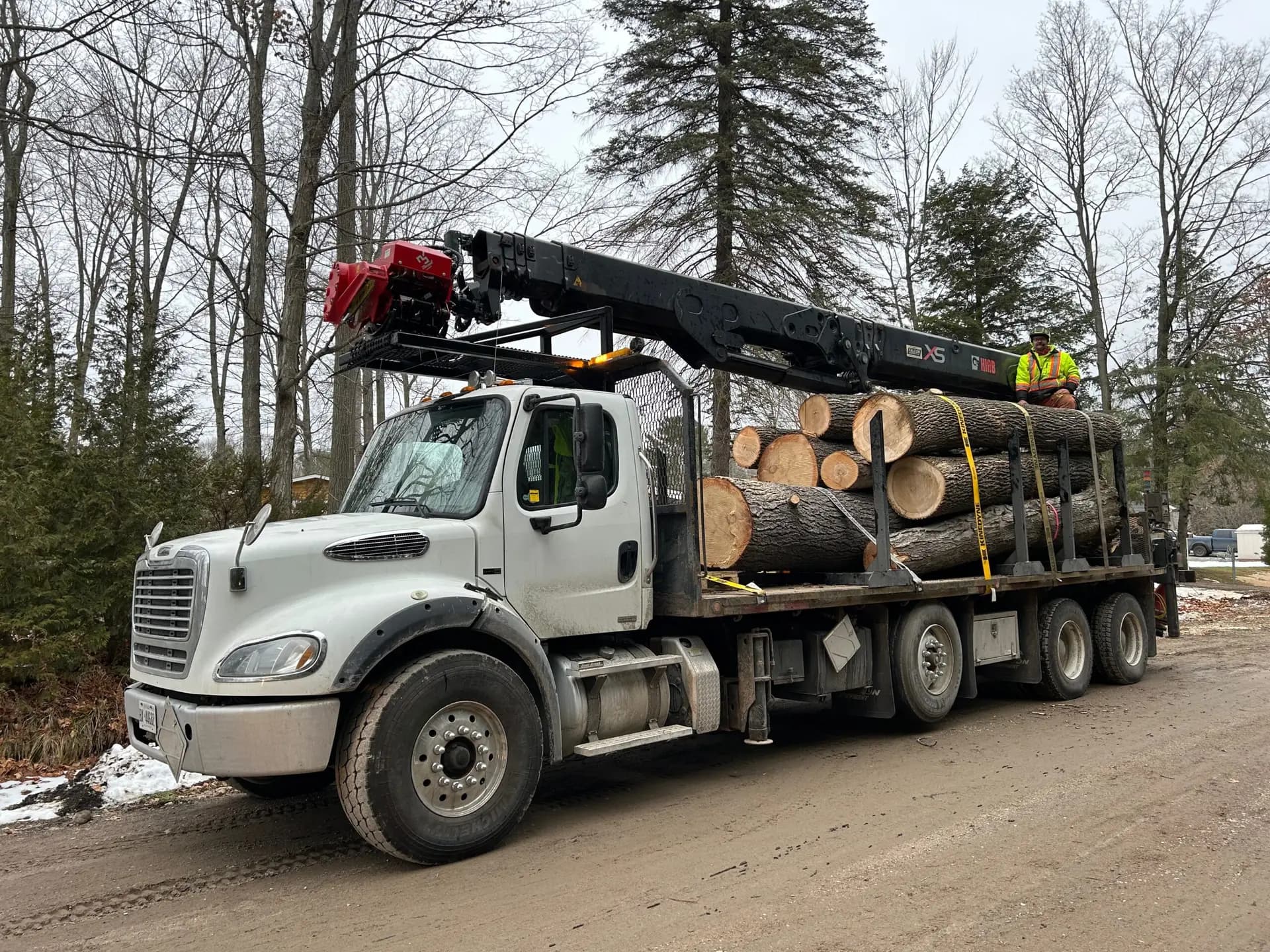
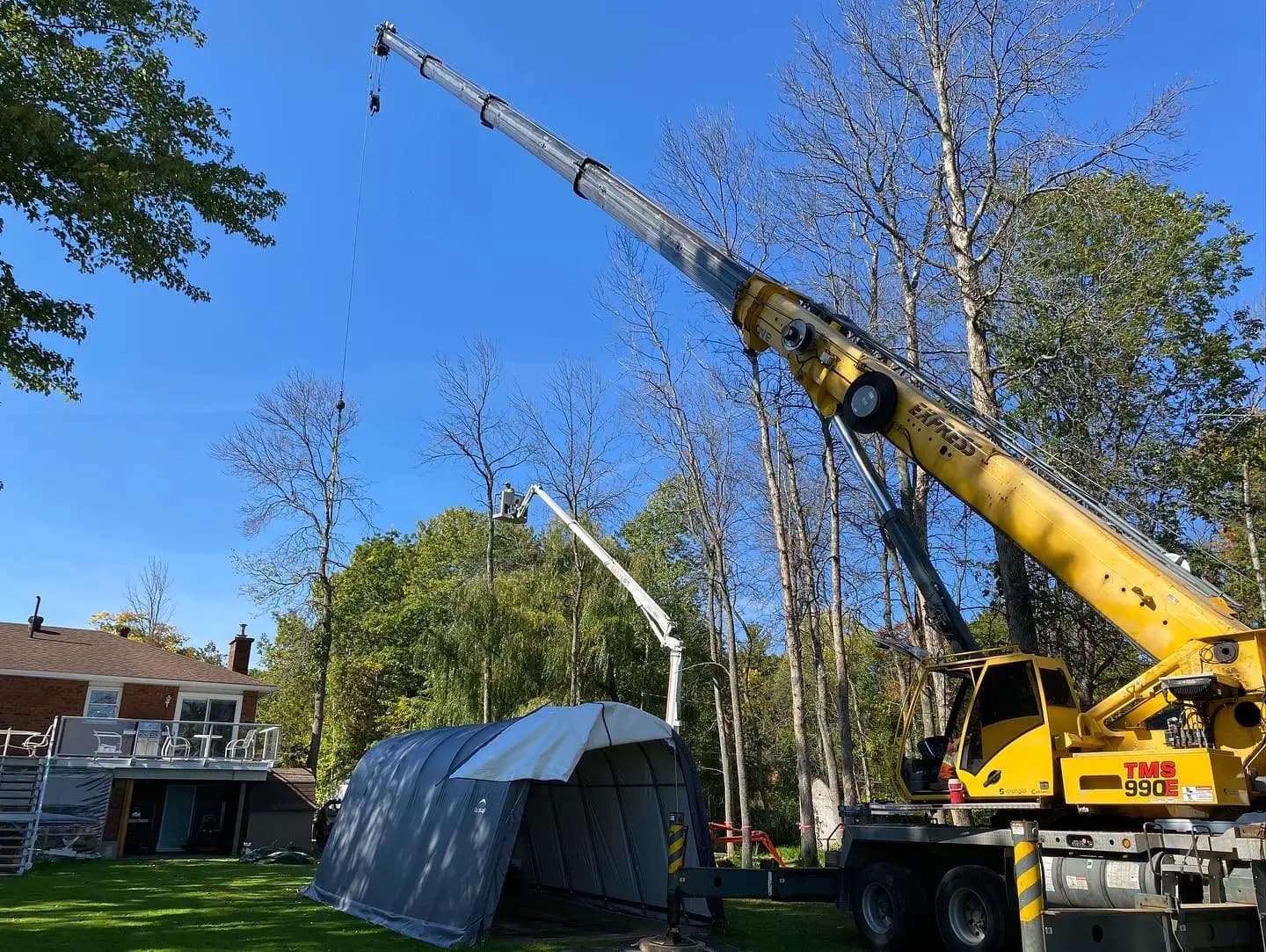
Your arborist should walk you through exactly how the tree will come down. There are three primary methods used in Simcoe County. Directional felling is used when a tree has adequate clearance — typically 1.5 times its height — to be cut and dropped in one piece using a face cut, back cut, and wedges or pull ropes. This is the fastest and least expensive method, common on rural properties in Tiny Township and Tay. Climbing and rigging is required when the tree is too close to structures, power lines, or other trees for felling. A climber ascends the tree, removes limbs section by section, and lowers them on ropes to a controlled drop zone. This is the most common method for residential properties in Barrie, Midland, and Penetanguishene where houses are close together. Crane removal is used for very large trees, trees in tight backyards with no equipment access, or trees where structural compromise makes climbing unsafe. A crane lifts sections over the house and sets them down in the street or driveway for processing. In Simcoe County, crane work typically adds $1,500–$4,000 to the job depending on crane size and duration.Step 5: Know What the Quote Includes
A professional written quote should clearly specify the scope: which trees are being removed, the method, whether stump grinding is included or quoted separately, how brush and wood will be handled (chipped on-site and hauled away, or left for the homeowner), and site cleanup and restoration. In Simcoe County, typical 2026 market rates for tree removal are: small trees under 25 feet at $400–$800, medium trees 25–60 feet at $800–$2,000, large trees over 60 feet at $2,000–$6,000+, and crane removals in confined spaces at $4,000–$12,000+. Stump grinding is usually quoted separately at $150–$500 per stump depending on diameter and root complexity. Quotes significantly below these ranges often indicate missing insurance or inadequate equipment.Step 6: Prepare Your Property
Before the crew arrives, clear the area around the tree. Move vehicles, patio furniture, potted plants, and anything breakable out of the drop zone. Ensure there is parking space for multiple trucks and a chipper trailer — typically 60–80 feet of road frontage. If access to the tree requires entering a neighbour's property, get written permission in advance. Keep children and pets indoors during the work.Step 7: The Removal Day
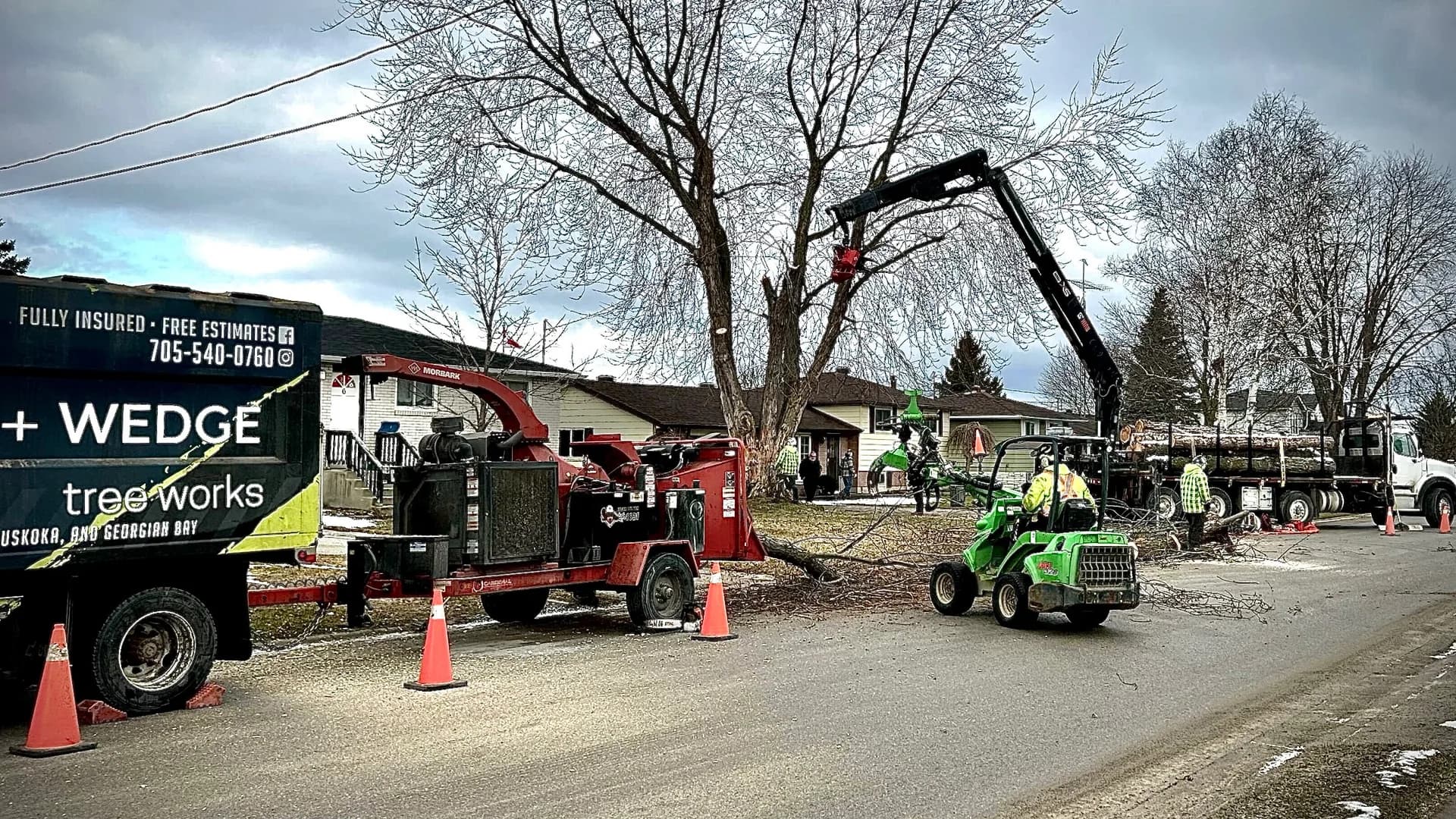
On the day of the job, the crew will arrive with trucks, a chipper, rigging equipment, and — if needed — a crane or spider lift. The crew lead will conduct a site walk with you to confirm scope, then hold a tailboard safety meeting with the team covering hazards, roles, and the work plan. During the work, expect noise from chainsaws and the chipper, temporary road or driveway blockage, and occasional vibration if a large trunk section is being lowered to the ground. A typical single-tree removal takes 2–6 hours depending on size and complexity. Large crane removals or multi-tree lot clearing projects may take a full day or more.Step 8: Cleanup and Stump Options
After the tree is down, the crew processes all brush through the chipper, cuts the trunk into manageable rounds, and rakes the site clean. At Axe & Wedge, cleanup is included in every quote — we leave properties clean enough to earn those 5-star reviews. For the stump, you have three options: leave it to decay naturally over 5–10 years, have it ground 6–8 inches below grade with a stump grinder (the most common choice), or have it fully excavated if you plan to plant a replacement tree or build in the same spot.Red Flags to Watch For
Avoid any tree removal company that refuses to provide written proof of insurance and WSIB, gives a quote over the phone without visiting the site (the TCIA notes phone quotes are typically off by 30–50%), asks for full payment upfront before work begins, uses topping as a removal method (cutting the tree to a tall stump and leaving it), or arrives without proper safety equipment — hard hats, chaps, eye protection, and high-visibility clothing are mandatory under Ontario Ministry of Labour regulations.Why Species Matters in Simcoe County
The species of tree significantly affects removal complexity and cost. Ash trees killed by EAB become extremely brittle within 2–3 years of death — dead ash is one of the most dangerous trees to remove because branches snap unpredictably and the wood shatters rather than bending. Sugar maples and red oaks are dense hardwoods that require heavier rigging and more chipper capacity. White pines, while softer, can reach 80–100 feet in Simcoe County and their height combined with a shallow root plate makes them particularly susceptible to wind throw during Georgian Bay storms. White spruce and Eastern hemlock are common in woodlots and on waterfront properties — their dense canopy catches wind and snow, making them prone to leaning and co-dominant stem failure. Knowing the species helps your arborist plan the right equipment and crew size, which directly affects the accuracy of your quote.At Axe & Wedge Tree Works, we have been removing trees across Simcoe County since 2017 — from waterfront white pines in Tiny Township to EAB-killed ash in Barrie subdivisions to storm-damaged oaks in Orillia. If you have a tree that needs to come down, call 705-540-0760 for a free on-site assessment and written quote.