
The Emerald Ash Borer (EAB) is the most destructive invasive forest pest in North American history. Since its discovery in Windsor, Ontario in 2002, EAB has killed an estimated 100 million ash trees across Canada and the United States — and the toll continues to climb. In Simcoe County, EAB is well established and actively killing ash trees in every municipality from Barrie to Midland, Wasaga Beach to Orillia. If you have ash trees on your property, they are at risk. This guide covers what you need to know: how to identify an infestation, when treatment is still an option, and when removal is the safer and more practical choice.
How EAB Kills Ash Trees
EAB larvae feed on the inner bark (cambium) of ash trees, creating serpentine galleries that disrupt the tree's ability to transport water and nutrients between roots and canopy. A healthy ash tree can typically survive one or two years of infestation before symptoms become visible — but by that point, the damage is often extensive. Without treatment, virtually every untreated ash tree in an EAB-infested area will die within 3–5 years of initial infestation. The Canadian Forest Service confirms that EAB has a near-100% mortality rate in untreated ash populations.Signs of EAB Infestation
Early detection is critical because treatment is only effective when the tree still has enough healthy canopy to recover. Watch for these signs:- Crown thinning and dieback: The canopy starts thinning from the top down. You'll notice fewer leaves, smaller leaves, and dead branches in the upper crown — often while the lower canopy still looks relatively healthy.
- D-shaped exit holes: Adult EAB beetles emerge through distinctive D-shaped holes approximately 3–4 mm wide in the bark. These are a definitive sign of infestation.
- Bark splitting and serpentine galleries: As larvae feed beneath the bark, vertical splits may appear. Peeling back loose bark reveals the characteristic S-shaped feeding galleries packed with frass (sawdust-like waste).
- Epicormic sprouting: The tree produces desperate clusters of new shoots along the trunk and major branches — a stress response indicating the canopy is failing and the tree is attempting to generate new foliage closer to the root system.
- Increased woodpecker activity: Woodpeckers feed on EAB larvae. Heavy woodpecker damage — flaking bark, pecking holes — on an ash tree is a strong indicator of infestation.
When Treatment Is Still Viable
Trunk injection with emamectin benzoate (marketed as TreeAzin in Canada) is the most effective treatment against EAB. The active ingredient is injected directly into the tree's vascular system, where it kills feeding larvae and provides protection for up to two years per treatment. However, treatment is only viable when the tree meets certain criteria:- The tree retains at least 50–60% of its original canopy
- The trunk shows no signs of significant structural decay
- The tree is worth preserving — positioned to provide shade, privacy, or aesthetic value
When Removal Is the Better Option
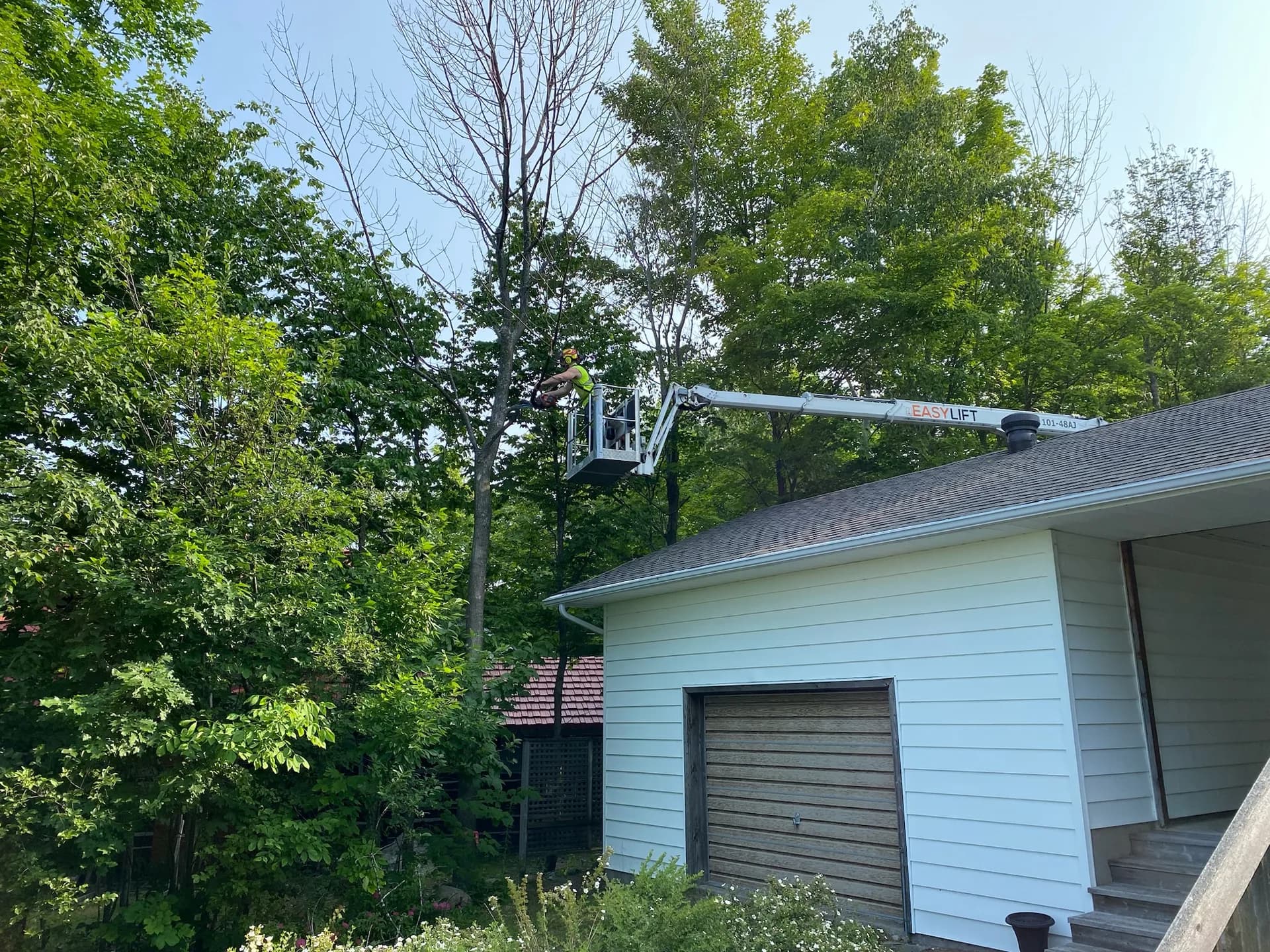
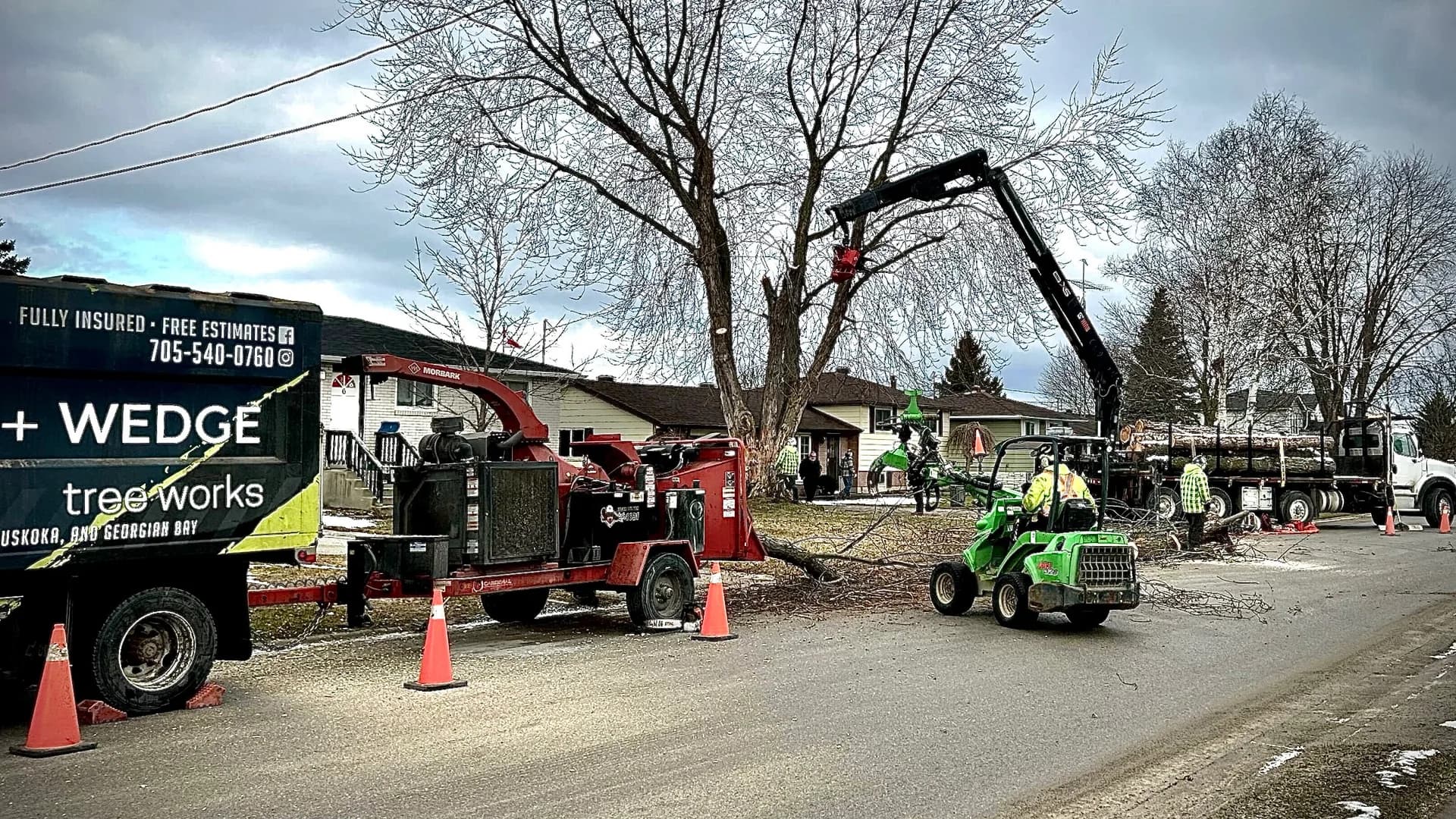
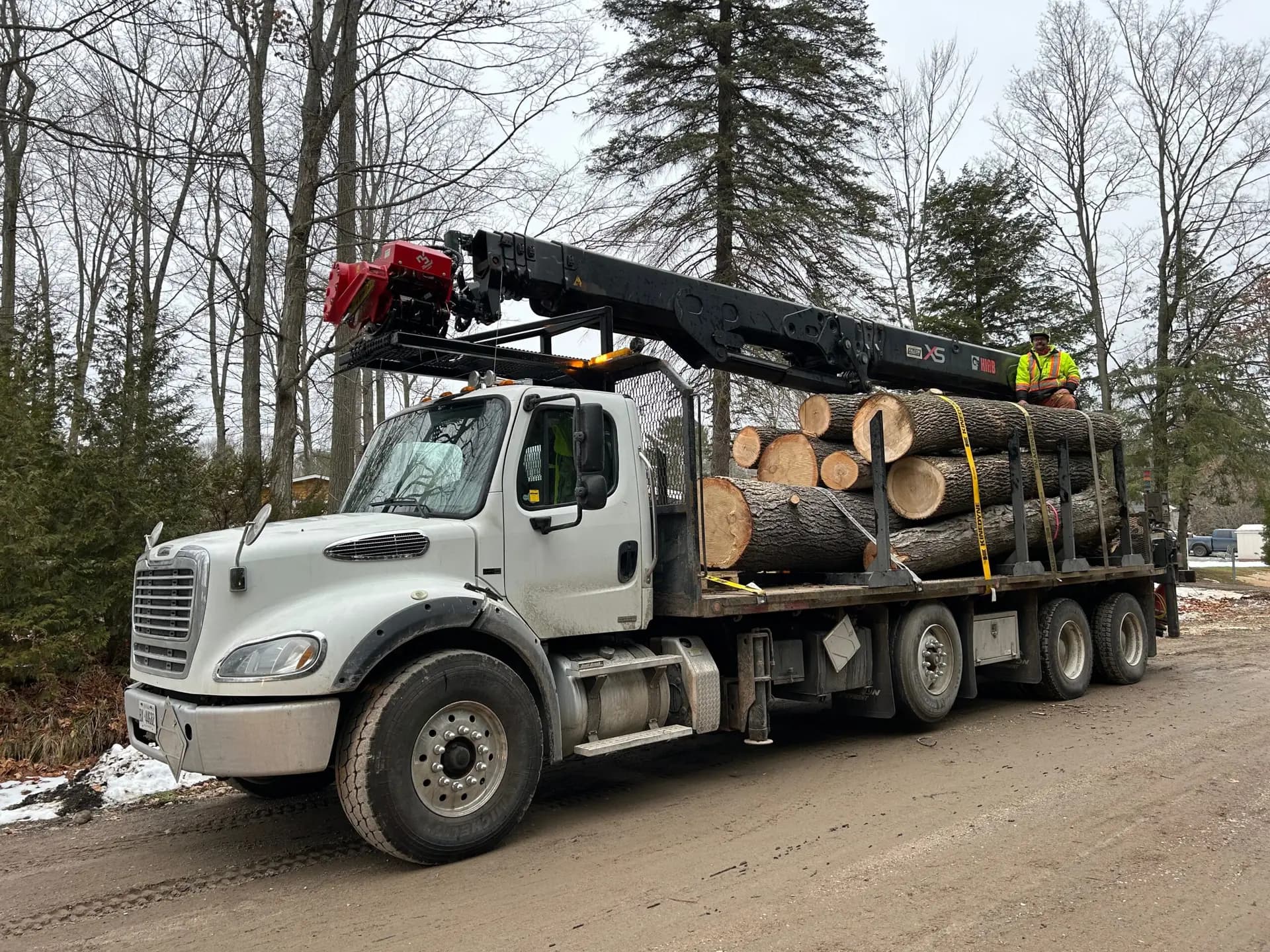
If an ash tree has lost more than 50% of its canopy, removal is almost always the better investment. A heavily infested tree will not recover even with treatment, and continuing to treat a declining tree is a sunk cost. Dead and dying ash trees also become extremely hazardous very quickly — EAB-killed ash trees lose structural integrity faster than almost any other species. The wood becomes brittle within 1–2 years of death, and branches and trunks can snap without warning. Insurance companies and municipalities across Ontario have flagged dead ash trees as a priority hazard. Delaying removal of a dead or severely declining ash tree increases both the risk and the eventual cost — dead ash trees are more dangerous and more expensive to remove than living ones because the brittle wood is unpredictable during dismantling. Our tree removal and hazard removal crews handle EAB-killed ash removals across Simcoe County daily.The Cost Question: Treatment vs. Removal
Here's a realistic comparison for a mature ash tree (40–50 cm trunk diameter) in Simcoe County:- Trunk injection treatment: $320–$750 every two years, ongoing for the life of the tree
- Removal: $1,500–$4,000 one-time cost (depending on size and access), plus $150–$400 for stump grinding