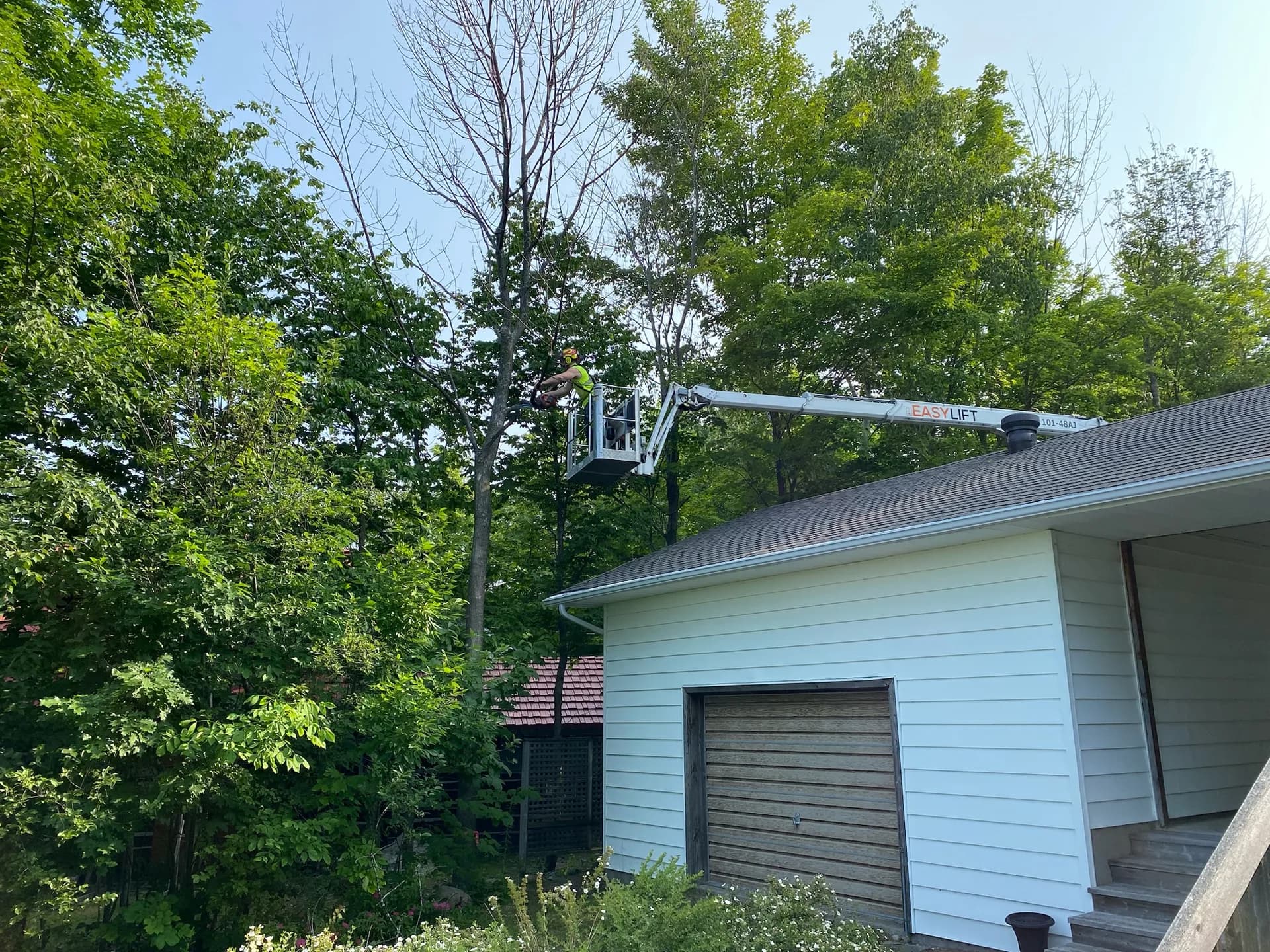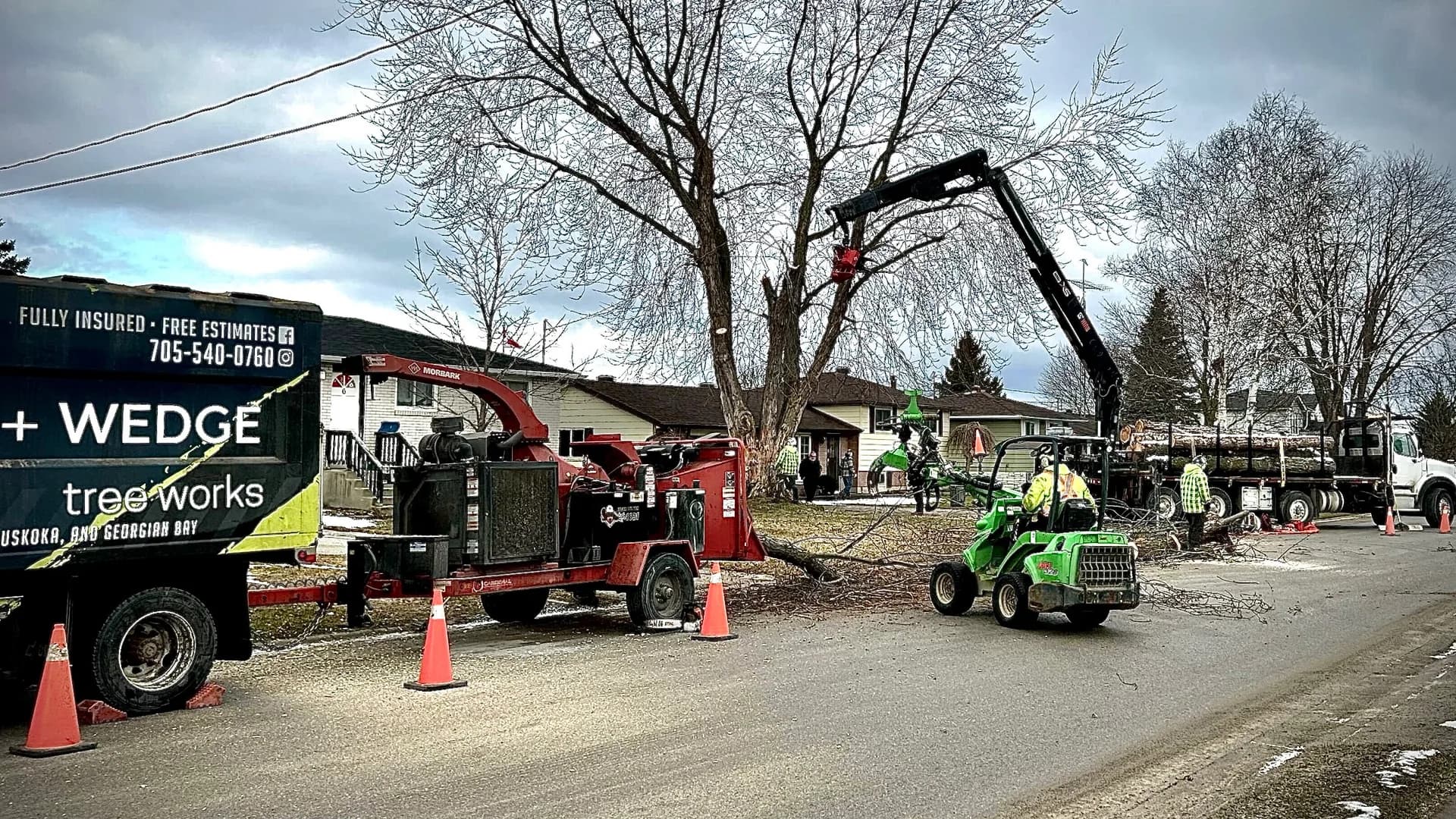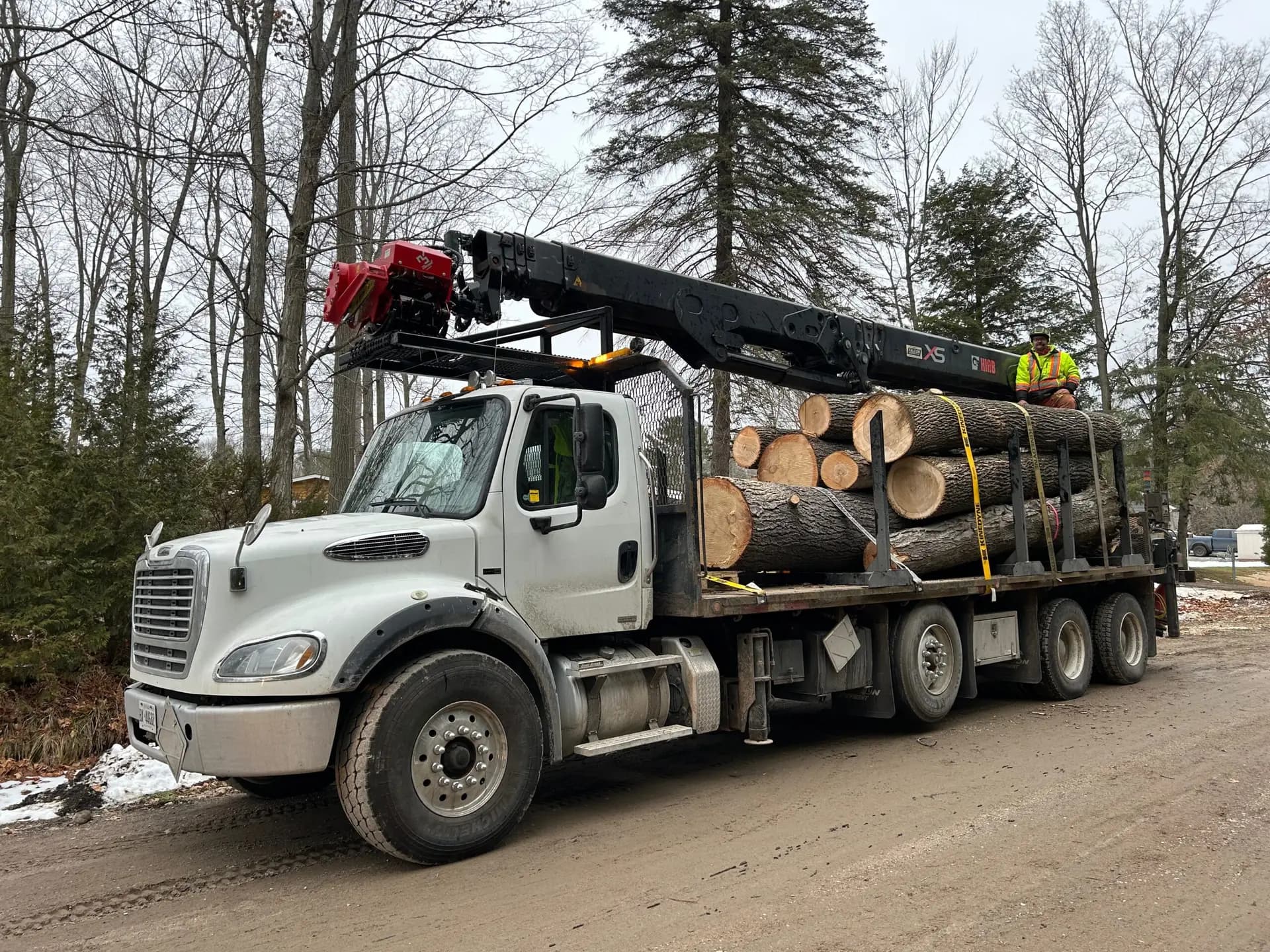
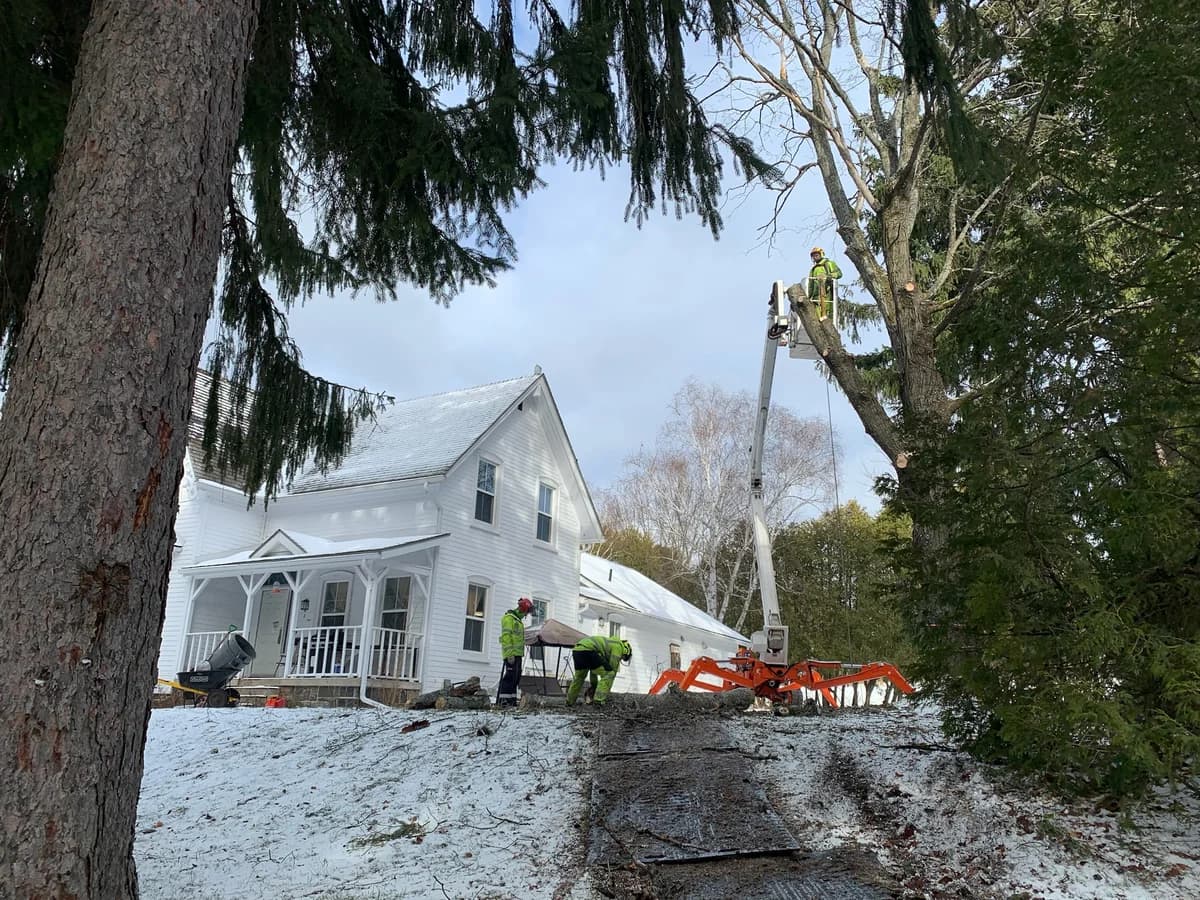
In Ontario, tree removal permits are regulated at the municipal level — not provincially. That means the rules in Barrie are different from the rules in Midland, which are different again from Collingwood or Tiny Township. For homeowners in Simcoe County, this creates genuine confusion: is a permit required to remove a tree on my own property?
The short answer is: it depends on your municipality, the size of the tree, and where it is located on your property. Here is what you need to know.
Why Municipalities Regulate Tree Removal
Municipalities regulate tree removal primarily through tree-cutting or tree-preservation bylaws. These bylaws exist to protect the urban forest — particularly large, mature trees that provide significant ecological, aesthetic, and economic value. According to the USDA Forest Service, a healthy mature tree can provide $300–$600 per year in ecosystem services including stormwater management, cooling, and air quality improvement. Municipal governments have increasingly recognized that the urban tree canopy is a shared public asset even when individual trees sit on private property.
How Simcoe County Municipalities Handle Tree Permits
The municipalities that make up Simcoe County each have their own bylaws. As a general guide: Barrie has an active tree preservation bylaw that applies to trees above a certain diameter (typically 20 cm DBH — diameter at breast height) within the urban area. Removal of regulated trees requires a permit and, in some cases, replacement planting. Midland, Penetanguishene, and Tiny Township have bylaws focused more on woodlot protection and trees within specified setbacks from wetlands, water bodies, and environmentally sensitive areas. Collingwood and Wasaga Beach have bylaws that regulate removal of trees above a minimum size on urban residential properties. Orillia has a street tree bylaw that prohibits removal of city-owned boulevard trees without approval.
These bylaws change over time, and the specifics matter — always confirm with your local municipal office before undertaking any significant tree removal.
When a Permit Is Most Likely Required
You are most likely to need a permit in the following situations: the tree has a trunk diameter of 20 cm or greater (measured at 1.4 metres above grade); the tree is in a regulated setback from a watercourse, wetland, or environmentally sensitive area; the property is within a regulated urban or settlement area; the tree is on a boulevard or within the municipal road allowance; or the property is in a Conservation Authority regulated area (many parts of Simcoe County fall under the Nottawasaga Valley or Lake Simcoe Region Conservation Authorities).
When a Permit Is Usually Not Required
For small ornamental trees (typically under 20 cm DBH) on private residential property in most Simcoe County municipalities, a permit is generally not required. Similarly, dead trees that pose a documented safety hazard are often exempt from permit requirements — though you may need an arborist report confirming the hazard. Always verify with your municipality rather than assuming.
What Happens If You Remove a Tree Without a Required Permit?
Removing a regulated tree without a permit can result in fines ranging from several hundred to tens of thousands of dollars depending on the municipality and the significance of the tree. You may also be required to plant replacement trees at your own expense. The cost of the fine almost always exceeds the cost of obtaining the permit — it's never worth skipping.
How to Get a Tree Removal Permit in Simcoe County
The permit application process varies by municipality but typically involves submitting an application to the municipal planning or public works department, providing the location and size of the tree, and in some cases providing an arborist report documenting the condition of the tree and the reason for removal. At Axe & Wedge Tree Works, we can provide ISA Certified Arborist reports for the permit applications that most Simcoe County municipalities require. Call us at 705-540-0760 and we can walk you through what is needed for your municipality.